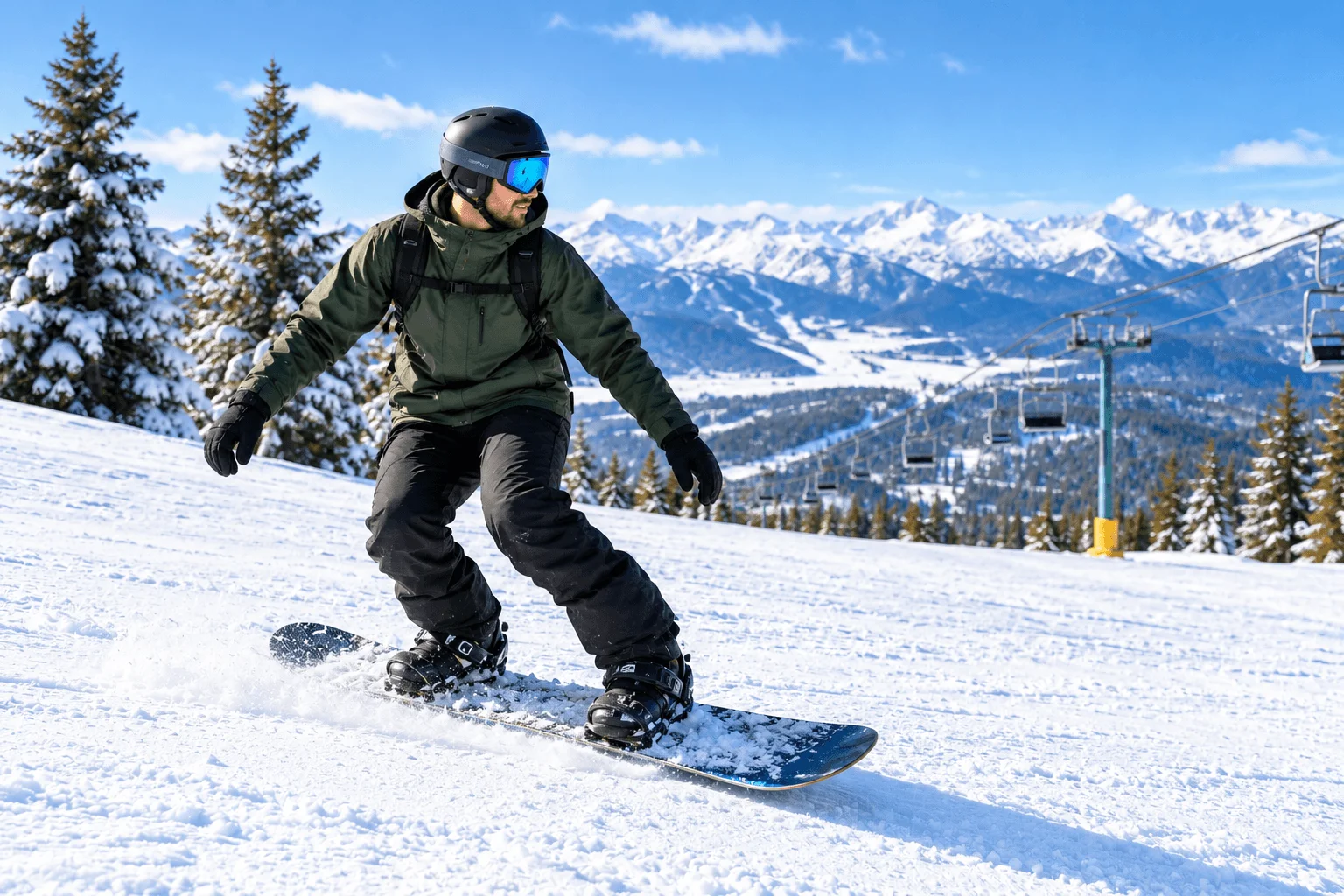
Snowboarding on your first day can feel exciting, challenging, and a little confusing. You may wonder what to wear, which snowboard gear to rent, how to stand on the board, or how hard it will be to make your first turn. The good news is that you do not need to master everything at once. Snowboarding for beginners is all about learning the basics, staying patient, and building confidence one step at a time. In this guide, I’ll walk you through what to expect on your first day snowboarding, from choosing the right equipment and finding your snowboard stance to learning how to stop, turn, fall safely, and use a chairlift. You’ll also learn what to practice, which common mistakes to avoid, and what realistic progress looks like after your first day.
What to Expect on Your First Day of Snowboarding
Your first day snowboarding will probably feel different from what you expect. At first, standing on a board can feel strange, and keeping your balance may take some practice. If you are a beginner snowboarder, do not worry if you fall several times. Falling is a normal part of learning to snowboard. Your first goal should not be speed or difficult runs. Instead, focus on balance, edge control, stopping, and basic turns. You may spend a lot of time practicing the same movement before it feels natural. A good first day snowboarding experience is about making small improvements. By the end of the day, you may be able to skate, stop, make simple turns, and ride easy terrain. Patience and practice matter more than perfection.
What to Do Before You Leave for the Mountain
Good preparation can make your first day on a snowboard much easier. Before leaving home, check the weather and mountain conditions so you know what to expect. If possible, arrange your snowboard rental and beginner lesson ahead of time. You should also check the resort’s opening hours, parking options, and lift ticket details. Pack your snowboard clothing, helmet, goggles, gloves, and extra layers. Bring water and a few snacks because learning to snowboard can use a lot of energy. Arrive early enough to collect your equipment without rushing. If this is your first time snowboarding, give yourself extra time for getting dressed, finding the lesson area, and adjusting your gear. A simple first-day snowboard checklist can help you avoid forgetting important items.
What to Wear and Pack for Your First Snowboard Day
Choosing the right snowboard clothing can make a big difference during your first day. Start with a comfortable base layer that helps move moisture away from your skin. Add a warm middle layer if the weather is cold. Your outer jacket and snowboard pants should protect you from wind and snow. Wear proper snowboard socks instead of several thick pairs that can make your boots uncomfortable. You will also need snowboard gloves or mittens, a helmet, and goggles. Waterproof clothing is especially useful because beginners often spend time sitting or falling in the snow. Pack water, snacks, sunscreen, lip balm, and an extra layer. Avoid wearing cotton when possible because it can stay wet. The right snowboard gear keeps you warm, dry, and comfortable while you learn.
Choosing a Beginner-Friendly Snowboard Resort
The right resort can make learning to snowboard much less stressful. Look for a mountain with a clear beginner area, gentle slopes, and an easy learning zone. A bunny hill or beginner run is usually better than starting on a steep mountain. Many resorts also have a magic carpet, which makes it easier for new riders to return to the top without using a chairlift. Check whether the resort offers a snowboard school, beginner snowboard lesson, equipment rental, and easy access to food and rest areas. Good beginner facilities can save you time and reduce stress. When choosing a resort, also consider parking, restrooms, warming areas, and weather conditions. A beginner-friendly snowboard resort should give you enough space to practice without feeling pressured by faster or more experienced riders.
Rent Your Gear or Buy a Snowboard?
If this is your first snowboard trip, renting equipment is often a practical way to start. You can try snowboarding without spending a lot of money on a complete setup. A rental shop can usually help you choose snowboard boots, bindings, and a beginner snowboard that fit your needs. Make sure your boots feel snug but not painfully tight. Your board should also be suitable for your height, weight, and ability. Many beginners prefer a board with a softer flex because it can feel easier to control while learning. Ask the rental staff about snowboard sizing, board length, and binding setup. You can think about buying your own equipment after you know that you enjoy the sport. For your first day, comfortable and correctly fitted gear matters more than having expensive equipment.
Why You Should Take a Beginner Snowboarding Lesson
Taking a snowboard lesson can help you learn the right movements from the start. A qualified snowboard instructor can show you how to stand, balance, skate, stop, and turn safely. You can choose between a private lesson and a group snowboard lesson, depending on your budget and comfort level. Friends may offer useful advice, but an instructor understands how to teach complete beginners. During your first snowboard lesson, do not worry about learning everything immediately. Listen carefully and practice one skill at a time. Your instructor can also help you choose suitable beginner terrain and decide when you are ready to move forward. If you are nervous about your first day snowboarding, a lesson can make the experience feel more organized and manageable.
Find Your Snowboard Stance and Set Up Your Bindings
Before you start riding, you need to find your natural snowboard stance. Most riders use either a regular stance, with the left foot forward, or a goofy stance, with the right foot forward. Your lead foot is the one that feels more comfortable in front. You can try a simple sliding or pushing test to see which foot naturally moves forward. Once you know your stance, the rental staff or instructor can help adjust your snowboard bindings. The correct binding angles and stance width can make the board feel more comfortable and easier to control. Do not worry if your stance feels strange at first. It takes time for your body to get used to the board. Focus on a relaxed posture and keep your knees slightly bent.
Learn to Strap In, Stand Up, and Skate
Once your snowboard stance is ready, it is time to learn the basic movements. Start by sitting down and securing your front foot in the binding. Practice standing up without letting the board slide away. Next, learn how to skate on a snowboard with your back foot free. Use your free foot to push gently while your front foot stays attached. This skill helps you move across flat areas and prepare for lifts. Keep your knees slightly bent and your body relaxed. Avoid leaning too far backward because this can make balance harder. You may fall while learning, and that is completely normal. Take your time with one-foot riding, balance, and skating before moving onto a slope. These simple skills create the foundation for safe beginner snowboarding.
Learn to Stop Before You Learn to Go Fast
One of the most important snowboarding basics is learning how to stop. Before trying to ride faster, you need to control your speed. Beginners usually start by learning to use the heel edge to slow down and stop. Later, you can practice the toe edge in the same way. Your instructor may also teach you side slipping or the falling leaf technique to help control your movement across a slope. Keep your knees bent and apply gentle pressure to the edge instead of making sudden movements. Good snowboard edge control gives you more confidence and safety. Do not worry about going fast on your first day. Learning how to stop on a snowboard is much more important than learning how to race down a hill.