
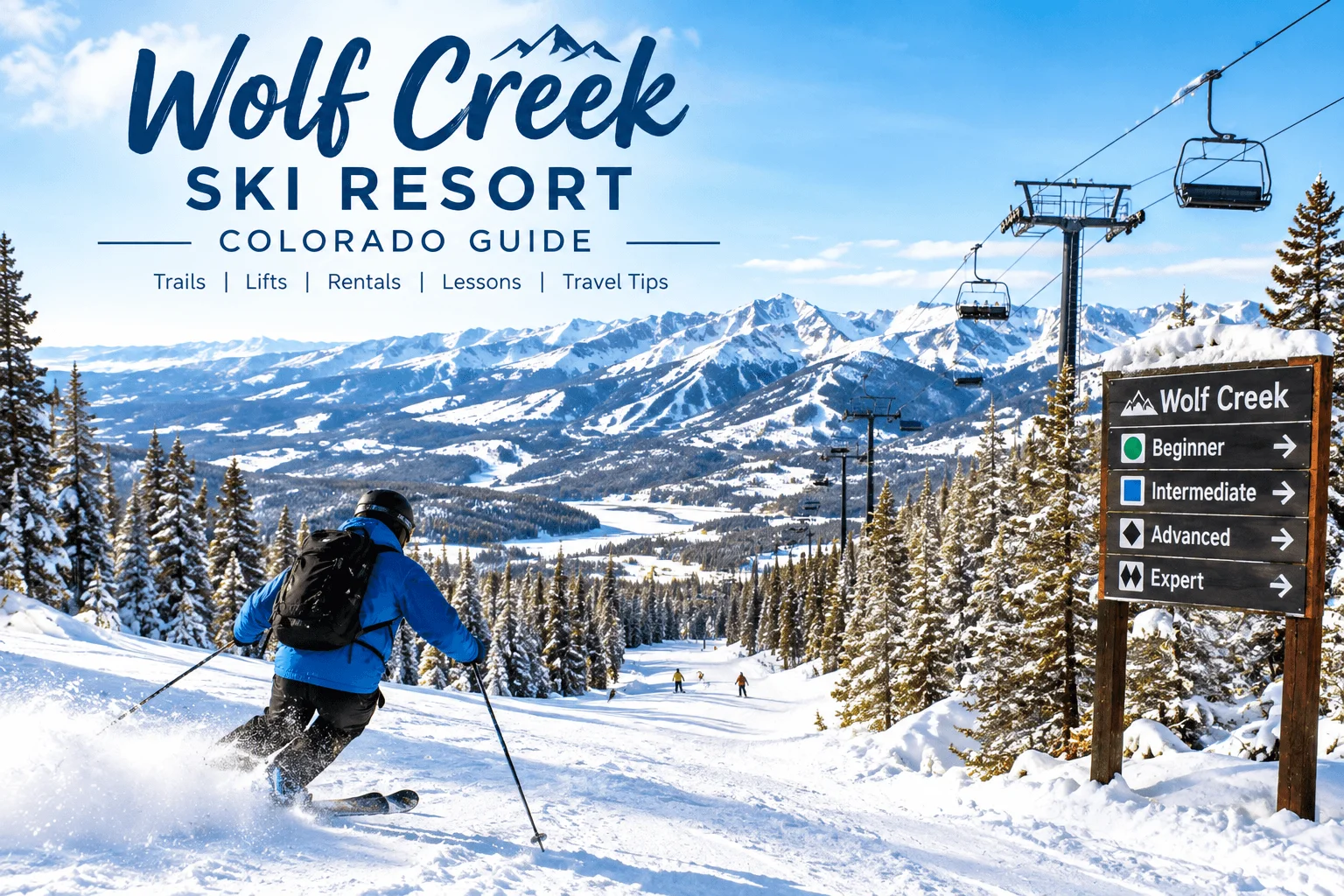
Planning a trip to Wolf Creek Ski Resort in Colorado? This guide covers everything you need to know before you go. Located in Southern Colorado on scenic Wolf Creek Pass, the resort is known for its deep natural snowfall, varied ski terrain, and relaxed mountain atmosphere. Whether you are a beginner skier, an intermediate rider, or an experienced powder seeker, Wolf Creek offers trails and terrain for different skill levels. You can explore 1,600 skiable acres, enjoy impressive powder skiing, and take in views of the San Juan Mountains. This guide also covers Wolf Creek lift tickets, ski rentals, lessons, parking, nearby lodging, dining, road conditions, and the best time to visit. If you are planning a Wolf Creek ski trip, these practical tips will help you prepare and enjoy your time on the mountain.
Quick Answer:
Wolf Creek Ski Resort in Southern Colorado is a relaxed, family-owned ski area on Wolf Creek Pass, known for its abundant natural snowfall, powder skiing, and varied terrain. With about 1,600 skiable acres, the resort offers beginner, intermediate, advanced, and expert runs. Visitors can enjoy skiing and snowboarding, lessons, rentals, dining, and scenic views of the San Juan Mountains. South Fork and Pagosa Springs are the main nearby lodging options. Before visiting, check current snow conditions, lift status, weather, road conditions, and Wolf Creek Pass travel requirements.
Where Is Wolf Creek Ski Resort and What Is It Like?
Wolf Creek Ski Resort is in Southern Colorado, along Wolf Creek Pass on U.S. Highway 160. The mountain sits between Pagosa Springs and South Fork, making both towns useful places to stay during a Wolf Creek ski trip. The resort is surrounded by the San Juan Mountains and Rio Grande National Forest, giving the area a quiet, natural setting. Unlike large Colorado ski resorts, Wolf Creek has a more relaxed and simple feel. It is also known for its family-owned character and strong focus on skiing. The remote location means you should plan your drive, lodging, and winter travel carefully. If you enjoy powder skiing, mountain views, and a less developed resort setting, Wolf Creek offers a different kind of Colorado ski experience.
Wolf Creek Ski Resort at a Glance
Before planning your visit, it helps to understand the basic Wolf Creek mountain statistics. The resort has about 1,600 skiable acres and 42 miles of trail mileage, giving visitors plenty of terrain to explore. Its base elevation is around 10,300 feet, while the summit reaches about 11,904 feet. The mountain has a 1,604-foot vertical drop and a longest run of roughly two miles. Wolf Creek also has 11 ski lifts serving different parts of the mountain. Terrain is divided into about 20% beginner, 35% intermediate, 25% advanced, and 20% expert areas. The resort is especially famous for its snow, with an average annual snowfall of about 430 inches. These numbers help explain why Wolf Creek attracts both new skiers and experienced powder seekers.
What Makes Wolf Creek Different From Other Colorado Ski Resorts?
One of the biggest reasons people visit Wolf Creek Ski Area is its different approach to the typical Colorado ski resort experience. Wolf Creek is family-owned and operated, and it has a more laid-back mountain feel than many large destination resorts. Its location also keeps it away from the busy resort-village atmosphere found at places such as Vail or Breckenridge. Another major attraction is its natural snowfall, which makes Wolf Creek popular with people looking for powder skiing in Colorado. The mountain also offers terrain for several skill levels, from beginner slopes to steep expert areas. You will find fewer luxury resort features here, but that can be part of the appeal. For travelers seeking a low-key ski resort, mountain adventure, and a more traditional Colorado skiing experience, Wolf Creek has plenty to explore.
What Is the Skiing Like at Wolf Creek?
Wolf Creek skiing offers a mix of wide groomed runs, tree skiing, bowls, chutes, glades, ridges, and steeper terrain. The mountain has enough variety for beginners who are learning the basics and experienced skiers searching for challenging lines. About 20% of the terrain is beginner, while intermediate, advanced, and expert areas make up the rest. This means you do not have to be an expert to enjoy the resort. At the same time, skilled skiers can find demanding terrain higher on the mountain. Areas around Alberta Peak, Knife Ridge, and several bowls provide a more adventurous experience. Powder is another major part of the Wolf Creek experience. After a storm, skiers often look for fresh snow in trees, bowls, and less-traveled areas. Always check current conditions before choosing challenging terrain.
Wolf Creek Terrain by Ability Level
Beginner Terrain
Wolf Creek beginner terrain gives new skiers a place to learn without immediately facing difficult slopes. Areas around Nova, Lynx, and Tumbler provide access to easier runs and learning areas. Beginners can also consider Wolf Creek ski lessons to build confidence before exploring more of the mountain. The resort’s terrain mix means families and first-time skiers can enjoy a full ski day while progressing at their own pace. It is still important to check trail signs and stay within your ability level. A beginner should not assume that every part of Wolf Creek is easy simply because the resort welcomes new skiers. Start with the easier areas, practice basic turns and stopping, and move toward longer runs when you feel ready. This approach makes Wolf Creek skiing for beginners more comfortable and enjoyable.
Intermediate Terrain
Intermediate skiers have many options when exploring Wolf Creek intermediate terrain. Once you are comfortable on blue runs, you can explore longer groomed trails and begin trying more varied snow. Areas served by lifts such as Treasure Stoke, Bonanza, and Tranquility can provide a useful step beyond beginner slopes. Intermediate skiers can also explore tree-lined sections when conditions and confidence allow. One benefit of Wolf Creek is that you can gradually move between different types of terrain instead of staying on only one run. Snow conditions can change during the day, so a trail that feels easy in one condition may feel harder later. If you are planning a Wolf Creek ski trip as an intermediate skier, study the Wolf Creek trail map before arriving and choose routes that match your comfort level.
Advanced and Expert Terrain
Experienced skiers can find some of the most exciting Wolf Creek expert terrain in the upper parts of the mountain. Areas such as Knife Ridge, Montezuma Bowl, Horseshoe Bowl, Alberta Face, Coyote Park, and Keith’s Glades offer steeper and more technical skiing. Some routes require hiking, careful navigation, and strong control. The mountain’s hike-to terrain is especially attractive to advanced skiers looking for fresh lines and challenging snow. However, these areas should not be treated like ordinary groomed runs. Conditions can change quickly, and obstacles may not always be obvious. Skiers should understand their own ability before entering steep terrain. If you are visiting for advanced skiing or expert skiing, check the current mountain report and trail status before heading toward the upper mountain.
How Much Snow Does Wolf Creek Get?
Wolf Creek snowfall is one of the main reasons this Colorado ski area has such a strong following. The resort reports an average annual snowfall of around 430 inches, although actual snowfall can vary from one season to another. Its location in the San Juan Mountains helps create the deep snow that attracts powder skiers. During active storms, conditions can change quickly, and fresh snow can transform the mountain from groomed runs into a true powder skiing playground. Still, an annual snowfall average does not mean every visit will have perfect powder. Weather patterns, storm timing, wind, and temperature all affect snow quality. Before your trip, check the latest Wolf Creek snow report, snow depth, forecast, and webcams. This gives you a much better idea of what the mountain may be like when you arrive.
When Is the Best Time to Ski Wolf Creek?
The best time to ski Wolf Creek depends on the type of experience you want. Early season can offer exciting natural snow when storms arrive, but coverage may vary. December and January can bring winter conditions and good powder opportunities. February and March are often popular with skiers because the season is well underway and the mountain can have a strong base. Spring skiing can also be enjoyable when warmer weather creates softer snow later in the day. Instead of choosing one month as the universal best time, consider your own priorities. Powder seekers may focus on recent storms, while families may prefer stable travel conditions. Always check the current Wolf Creek ski season, weather, snow report, and road conditions before booking your trip.
Wolf Creek Lifts, Trail Map and Mountain Navigation
The Wolf Creek lift system includes 11 lifts that provide access to different parts of the mountain. Important lifts and areas include Treasure Stoke, Alberta, Bonanza, Tranquility, Nova, Lynx, and Tumbler. For first-time visitors, the Wolf Creek trail map is one of the most useful planning tools. Start by learning where the main base areas and beginner slopes are located. Then look at how the lifts connect to intermediate, advanced, and expert terrain. The map can also help you avoid accidentally entering terrain that is above your ability. Because Wolf Creek has bowls, trees, ridges, and hike-to areas, navigation becomes more important as you explore farther from the base. Before skiing, check the day’s lift status and trail openings so you know which parts of the mountain are available
Wolf Creek Lift Tickets, Season Passes and Ski Costs
Before visiting, check the latest Wolf Creek lift tickets and pass options because prices can change by season. The resort may offer different rates for adults, children, seniors, and other visitor groups. You may also find options for half-day or multi-day skiing, depending on the current ticket program. A Wolf Creek season pass can make sense for visitors who plan to ski several times during the season. Do not assume that major multi-resort passes include Wolf Creek. Check the current resort policy before purchasing a pass. It is also smart to buy tickets ahead of time when possible. Compare the current ticket price with your travel plans, rental costs, lessons, food, and lodging. This gives you a clearer picture of your total Wolf Creek ski trip budget.
Ski and Snowboard Lessons at Wolf Creek
New skiers and snowboarders can use Wolf Creek ski lessons to learn basic skills and become more comfortable on the mountain. Lessons can be useful for both children and adults. Depending on the current program, visitors may have options for group or private instruction. Beginners can learn how to stop, turn, control speed, and use the lifts safely. More experienced riders can also benefit from instruction when they want to improve technique or explore new terrain. If you are traveling with children, check the age requirements and lesson schedule before your visit. It is also a good idea to reserve lessons early during busy periods. Remember that learning takes time. Start on terrain that matches your ability and follow your instructor’s advice. Good instruction can make your Wolf Creek skiing experience more relaxed and enjoyable.
Where to Stay Near Wolf Creek Ski Resort
There is not a large resort village directly around Wolf Creek Ski Resort, so many visitors stay in nearby communities. South Fork is about 18 miles from the mountain and offers hotels, cabins, vacation rentals, and other places to stay. Pagosa Springs is another popular option and is about 23 miles away. It offers more choices for lodging, restaurants, shops, and other travel services. When choosing Wolf Creek lodging, think about your daily driving time and winter road conditions. A cabin can work well for families or groups, while a hotel may be easier for a short ski trip. Booking early can give you more choices during holidays and busy weekends. If skiing is your main goal, choose a place with easy access to Wolf Creek Pass and check the expected weather before driving to the resort.
How to Get to Wolf Creek and Drive Wolf Creek Pass Safely
The main road to Wolf Creek Ski Resort is U.S. Highway 160, which crosses Wolf Creek Pass. The resort sits between South Fork and Pagosa Springs, so your route depends on where you are staying. Winter driving can be very different from summer travel. Snow, ice, wind, and low visibility can make the pass challenging. Before leaving, check current road conditions, weather alerts, and any travel restrictions. If you are renting a vehicle, make sure it is suitable for winter roads. Carry an emergency kit and follow Colorado traction requirements when they are active. Road closures can also happen during major storms. If you are flying, Durango-La Plata County Airport and other regional airports may be useful depending on your route. Always allow extra travel time when driving to Wolf Creek in winter.
Wolf Creek Parking, Shuttles and Arrival Tips
Parking at Wolf Creek Ski Area is an important part of planning your ski day. The resort has parking areas near its base facilities, but the best place to park can depend on your arrival point and the day’s operations. During busy weekends and holidays, arriving early can make the process easier. Follow signs and staff instructions when entering the parking areas. If shuttle services or overflow parking are operating, check the latest resort information before your trip. Visitors should also look for designated accessible parking areas when needed. Do not assume that overnight parking or camping is allowed in every lot. Rules can change, so confirm them before leaving your vehicle. Keep your winter gear easy to reach because you may want gloves, boots, jackets, and goggles before walking from your car to the mountain.
Food, Drinks and Other Amenities at Wolf Creek
You do not need to leave the mountain every time you want food or a drink. Wolf Creek dining includes several base-area and on-mountain options where visitors can take a break between runs. Depending on current operations, you may find places such as the Alberta Grill, Continental Espresso Bar, and Pathfinder Bar. These facilities can be useful for breakfast, lunch, coffee, snacks, or a quick warm-up. You can also bring your own food if you prefer to control your budget and meal schedule. Check current operating hours because individual food locations may have different schedules. After skiing, nearby communities such as South Fork and Pagosa Springs provide additional choices for restaurants and drinks. If you are planning a full Wolf Creek ski day, carrying water and a small snack can also help you stay comfortable on the mountain.
What to Pack for a Wolf Creek Ski Trip
Packing the right gear can make your Wolf Creek ski trip much easier. Start with a waterproof jacket and ski pants that can protect you from snow and wind. Wear warm base layers instead of relying on one very thick layer. Bring quality gloves or mittens, ski socks, goggles, and a helmet. A neck gaiter and hand warmers can also be useful on cold days. If you have your own skis or snowboard, check your equipment before leaving home. Rental equipment is another option if you do not want to travel with your gear. Do not forget sunscreen, lip balm, water, and snacks. Your vehicle also needs winter supplies. Consider carrying an emergency kit, warm clothing, traction equipment when required, and suitable tires. Check the forecast before packing so you can adjust your layers.
Important Things to Know Before Visiting Wolf Creek
There are a few things to understand before visiting Wolf Creek Ski Resort. First, the mountain sits at high elevation, so cold weather and changing conditions are normal. Give yourself time to adjust and drink enough water during the day. Second, not every trail will have the same snow or surface conditions. Follow signs and choose terrain that matches your ability. Be especially careful around steep areas, trees, bowls, and hike-to terrain. Early-season snow can also leave natural obstacles exposed. Another important point is the resort’s location. Wolf Creek does not have the large village atmosphere found at some destination resorts. Plan your meals, lodging, fuel, and supplies before arriving. Finally, check the latest lift status, snow report, weather, road conditions, and operating information before leaving for your Colorado ski vacation.