
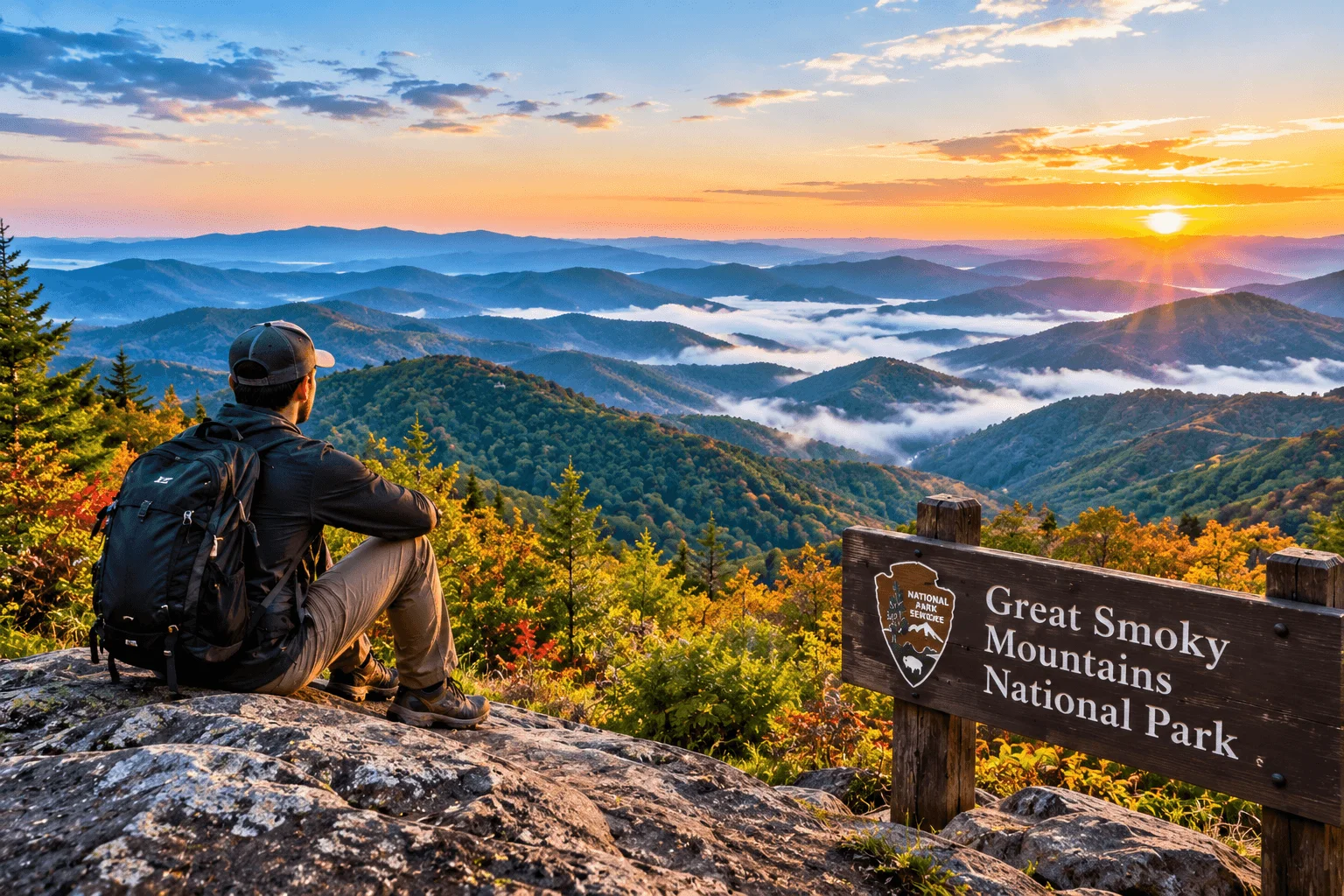
Smoky Mountains Travel Guide
The Great Smoky Mountains National Park is a beautiful, majestic, and sometimes spooky place that I always recommend visiting. It is especially enjoyable if you love outdoor adventure. The park stretches across Tennessee and North Carolina and became protected in 1934. Today, it remains the most visited national park in the United States.
Travelers can explore diverse flora and fauna, including old-growth forests, salamanders, and black bears. In fall, the mountains come alive with red and yellow colors. The park also offers more than 850 miles of trails, including the famous Appalachian Trail. Add numerous waterfalls, dramatic terrain, and mist-covered mountains, and it is easy to understand why the Smokies are a favorite destination for families, nature lovers, and adventure seekers.
For practical tips, plan around crowds and traffic. Knowing which places to avoid during the busiest periods can help prevent a stressful trip. Gatlinburg is a welcoming mountain town and a popular gateway to the park. Under Canvas Great Smoky Mountains offers another way to enjoy the area.
The park’s highest peaks and viewpoints provide impressive scenery. Its status as an International Biosphere Reserve and UNESCO World Heritage Site also highlights its natural importance.
History
The National Park Service has preserved and maintained approximately 80 historical buildings throughout the park. These buildings give visitors a direct connection to the area’s past.
Many early homes, grist mills, and barns remain viewable and accessible by foot. You can find them around Cades Cove and along nearby nature trails, including the Roaring Fork Nature Trail.
Visitors can also pick up an inexpensive self-guided tour booklet at many historic sites. These guides help explain the buildings and their former role in the community.
The Great Smoky Mountains Heritage Center and the Railroad Museum provide more in-depth stories about the past. I find these sites especially useful when planning a Smoky Mountains Travel Guide because they add historical meaning to a trip beyond scenery and hiking.
Exploring the historical buildings, walking the nature trails, and visiting local museums helps you understand how people once lived and worked throughout the Great Smoky Mountains.
Quick Answer
The Smoky Mountains Travel Guide covers the best things to do, scenic places, historic sites, hiking trails, and nearby attractions around Great Smoky Mountains National Park.
Popular highlights include Cades Cove, Kuwohi Observation Tower, Chimney Tops, Oconaluftee Visitor Center, Foothills Parkway, Fontana Dam, Asheville, and Knoxville.
You can also enjoy scenic drives, waterfalls, wildlife viewing, historic buildings, mountain trails, and peaceful picnic spots. For the best experience, plan your route ahead, arrive early at popular attractions, respect wildlife, and allow enough time to explore the mountains.
Mountain Farm Museum
The Mountain Farm Museum offers a glimpse into a re-created 19th-century farm in the heart of the Great Smoky Mountains.
Visitors can explore old log buildings collected from different locations throughout the park. The site also features a working farm with people in period costumes, real crops, and livestock.
It is an engaging stop for travelers who want to experience what mountain life was like in the past.
Oconaluftee Visitor Center
I recommend stopping at the Oconaluftee Visitor Center because it provides useful information and sits beside the Mountain Farm Museum.
During my visit, a National Park ranger was giving a lesson about elk. It added an educational touch to the experience.
If you stop here to get a parking tag, take some time to walk around the center and explore the nearby Mountain Farm Museum. It is an easy way to add history and local information to your Smoky Mountains Travel Guide.
Waterfalls
The Great Smoky Mountains National Park has more than 100 cascades and waterfalls, giving visitors plenty of scenic options.
Some famous waterfalls require a hike, including Grotto Falls, Laurel Falls, Abrams Falls, and Rainbow Falls. If you prefer less hiking, you can drive to Meigs Falls, The Sinks, or Place of a Thousand Drips.
These locations offer different ways to enjoy the park. You can choose a relaxing scenic drive or take an active trail to reach a waterfall.
Appalachian Waterfall
For a shorter adventure, take a short stroll along the Appalachian Waterfall trail to see one of the most beautiful waterfalls in the Southeast.
This short hike provides impressive views without requiring a long day on the trail. Guided tours are also available for groups that want extra guidance.
It is an easy option to add to your Smoky Mountains Travel Guide.
Great Smoky Mountains Railroad
The Great Smoky Mountains Railroad offers a relaxing way to explore the Smokies by train.
You can sit back, relax, and enjoy the scenery on one of the many excursions departing from Bryson City. After your train ride, continue your trip with a visit to the Smoky Mountain Trains Museum.
The museum provides an opportunity to learn more about the area’s railroad history.
Honey Bee Coffee
Honey Bee Coffee is a convenient place to stop for your morning coffee in downtown Sevierville, Tennessee.
If you want to slow down, relax, and enjoy a book, this quaint coffee shop offers a comfortable setting. It is located outside Pigeon Forge, making it an easy stop during a Smoky Mountains day.
Cades Cove
Cades Cove is an 11-mile one-way loop road surrounded by mountains and scenic countryside.
Along the route, you can explore historic homes, churches, cemeteries, and hiking trails. You also have a good chance of seeing wildlife.
During my visit, I saw turkeys, deer, and one huge elk. That made the drive even more memorable.
If you are traveling with kids, Cades Cove is worth adding to your Smoky Mountains itinerary. It combines scenery, history, and wildlife in one easy-to-follow route.
Plan extra time if you visit during a busy period. The 11-mile loop can take 2–4 hours.
You can also leave the main loop and choose shorter routes of 2 miles or 9 miles. We chose the 9-mile loop and arrived shortly before the area closed at dusk. Even then, the drive took about 45 minutes.
Check your timing before entering, especially if you want to stop and enjoy the sights instead of rushing through this popular area.
Kuwohi Observation Tower
The Kuwohi Observation Tower sits at the highest point in the National Park at 6,643 feet. It is also the 3rd highest peak east of the Mississippi.
From the tower, you can enjoy 360-degree views of the Smokies. The location is especially popular during sunrise and sunset.
The tower remains open year-round, but the road closes from early December through late March.
If you are an experienced hiker, you can reach the tower from Newfound Gap on a challenging 14.9-mile round-trip hike with 3,612 feet of elevation gain.
Things to Do Around the Great Smoky Mountains
With more than 800 miles of trails, the Great Smoky Mountains are a true hiker’s paradise.
There are countless options for different ages and activity levels. You can enjoy an easy stroll or challenge yourself with a climb up Mt. Leconte.
Mt. Leconte
Take an 11-mile round-trip trek on Mt. Leconte and choose the Alum Cave route for unforgettable views.
Bring sturdy hiking shoes, enough food, and plenty of water for your group before starting.
The route usually takes 7–9 hours, so prepare for a full day on the trail.
Charles Bunion
Enjoy an 8-mile round-trip hike to Charles Bunion and take in panoramic views of the surrounding rocky cliffs.
Fall is an especially beautiful time to visit. The changing colors create magnificent views across the mountains.
Chimney Tops Trail
Take a 3.3-mile hike on the Chimney Tops Trail, one of the most popular trails in the Great Smoky Mountains.
The hike leads to one of the few mountains with a bare rock summit. It also includes an elevation gain of approximately 1,487 feet.
Because the trail can become very popular during peak periods, plan accordingly and try to beat the crowds.
Hike to See the Chimney Tops
The Blue Ridge Parkway can become an all-day drive, so consider taking a hike to stretch your legs and explore the area.
Popular choices include Alum Cave Bluffs, Laurel Falls, Cades Cove, and Chimney Tops. However, parking can be limited, so arriving early is important.
Following a recommendation from a park employee, we chose the Chimney Tops hike to see the impressive rock pinnacles.
The trail starts with a relatively mild incline. However, the final section becomes much steeper and includes many steps.
The rewarding views require some effort. During our visit, a recent forest fire had caused part of the trail to close because the ground was considered unstable.
We saw signs and barriers. Some people ignored them, but I chose to respect the healing landscape and stay away from the unstable ground.
Even though we had to turn around, the beautiful views across the Great Smoky Mountains National Park made the hike worthwhile.
Spot Some Elk by the Cataloochee Valley Overlook
The Cataloochee Valley and Cataloochee Valley Overlook were not part of my initial itinerary. My B&B host recommended the area as a good place to see elk.
Elk often graze in open fields around dusk and dawn, so we went first thing in the morning.
Because we forgot about daylight savings time, we arrived around 10 a.m. and did not see elk in the meadow.
We still enjoyed exploring the area. The abandoned structures, calm natural setting, and fresh layer of frost on the meadows made the visit worthwhile.
The frost slowly melted over the course of an hour. Later, we were surprised to spot a few elk grazing in nearby fields.
Safety Tip: The Rule of “Thumb”
Always keep your distance from elk. They are fast and can become particularly aggressive during the fall.
Stay at least 50 meters away from an elk.
If you are unsure about the distance, use the thumb trick. Hold your thumb in front of you. If your thumb can cover the animal, you are far enough away.
Follow the same approach around bears. Never move closer simply to get a better photo or view.
Go Back in Time at The Caldwell House
The Cataloochee Valley contains a significant historical area where the remains of old houses and barns still dot the landscape.
Visitors can enter several buildings and look around. One of them is the Caldwell House, which once belonged to Hiram Caldwell, Elizabeth Caldwell, and their five children.
The family home was completed in 1903 and took five years to build. Workers used yellow poplar boards that they created on site.
The inside of the house is now empty, but it remains an interesting place to visit.
My favorite feature was the walls and ceilings covered with newspaper clippings from the early 1900s. Homeowners used these clippings to help keep out drafts and keep their homes warm.
It is one of the most fascinating details inside the house.
Foothills Parkway
The Foothills Parkway sits outside the park but offers wonderful mountain views with less traffic.
If the park closes for some reason, this route provides another great way to experience the Smokies.
You will also find plenty of pull-off spots where you can stop and enjoy gorgeous mountain overlooks.
Fontana Dam
If you enjoy impressive structures such as dams, Fontana Dam is worth a visit.
I stayed overnight near the dam, so I went to see it the following morning. It was pretty awesome.
The dam is about a 55-minute drive from the Cherokee entrance to the park.
If you enjoy coffee, stop at Cardinal Coffee along the way if you are coming from Cherokee.
Visit Asheville, NC
Asheville, North Carolina, is about 1 hour and 15 minutes from the Cherokee entrance to the Great Smoky Mountains.
I visited Asheville a few months after Hurricane Helene, and there was still plenty to do and see.
You can explore breweries in the South Slope neighborhood, enjoy shopping and restaurants downtown, tour the Biltmore Estate, or visit the River Arts District.
Although the River Arts District suffered major damage from the hurricane, the places that remain open are still worth seeing.
Asheville could benefit from tourism, so if you have enough time, consider adding the city to your trip.
Visit Knoxville, TN
Knoxville, Tennessee, makes a great addition to a Smoky Mountains trip.
The city sits about 50 minutes from the Townsend entrance and about 1 hour and 15 minutes from the Gatlinburg entrance.
Knoxville offers plenty to explore. Start with Market Square, a charming pedestrian area filled with restaurants and coffee shops.
It is an easy city stop to combine with your Great Smoky Mountains adventure.