
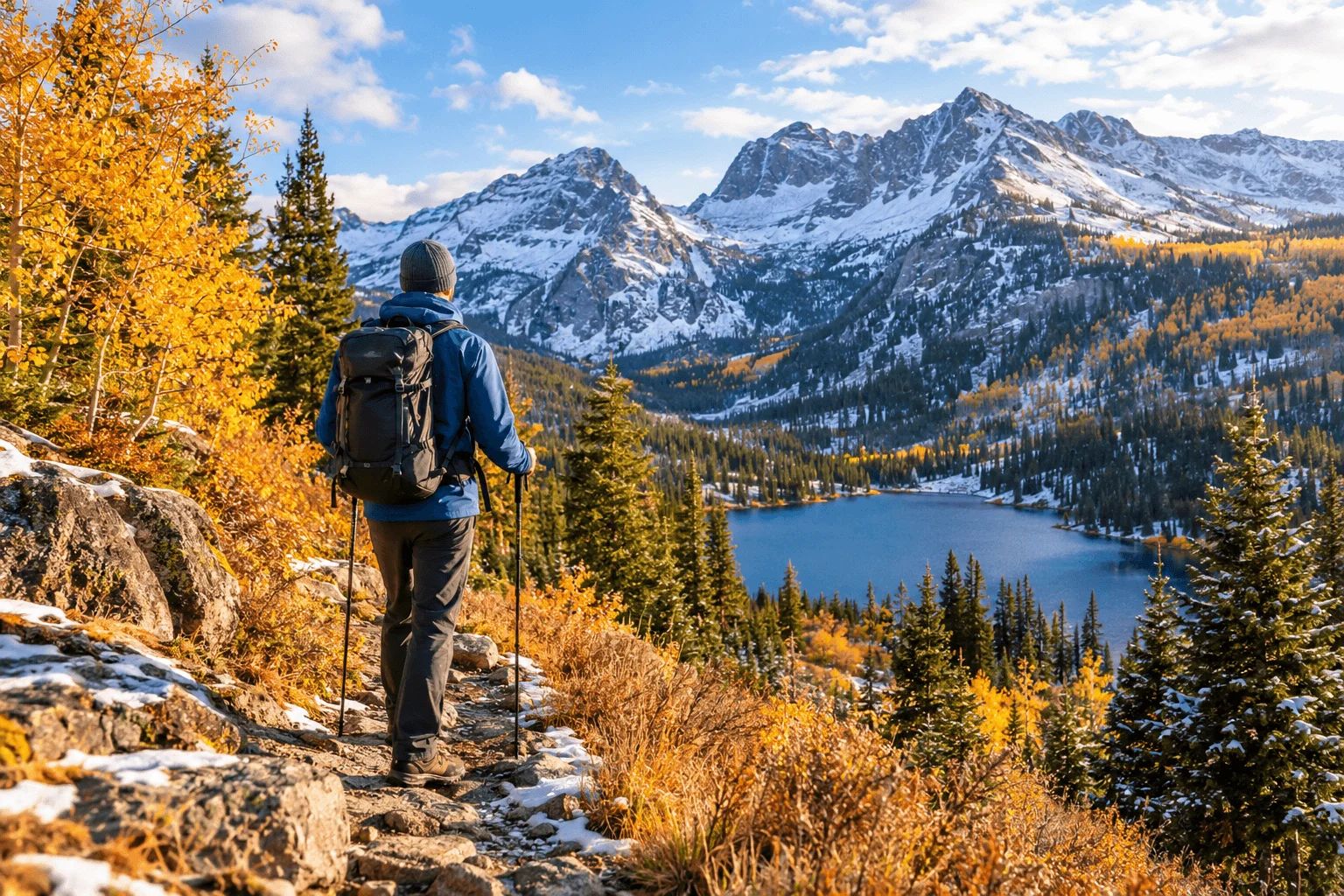
If you love Colorado hiking, late fall can be one of the best times to hit the trails. The crowds start to fade, the air feels crisp, and the mountains take on a quiet beauty. While many fall hikes in Colorado focus on golden aspens in September and early October, late fall hiking in Colorado is a different experience. By November, higher trails may have snow and ice, while lower-elevation trails can still offer great views and pleasant hiking conditions.
In this guide to the best late fall hikes in Colorado, I’ll share scenic trails worth considering in late October and November, including options near Denver. You’ll also find tips on fall colors, trail conditions, elevation, weather, gear, and safety, so you can choose the right Colorado trail for your next autumn adventure.
What Makes a Great Late Fall Hike in Colorado?
A great late fall hike in Colorado is not always the highest or most famous trail. By late October and November, weather and trail conditions can change quickly. A trail that feels easy in September may have snow, ice, or frozen ground later in the season. That is why I look at more than just beautiful fall colors when choosing a trail. Lower-elevation hikes, good trail access, shorter routes, and clear mountain views can be better choices for late-season hiking. It also helps to check elevation gain, difficulty, parking, road access, and recent trail conditions before leaving. Some trails may still have golden aspens, while others are better for mountain views, forests, lakes, or wildlife. The best Colorado fall hiking trails offer a good mix of scenery, access, and safe conditions.
Best Late Fall Hikes in Colorado
The best late fall hikes in Colorado offer something different from the popular peak-season trails. Instead of choosing a hike only for golden aspens, look for trails that remain enjoyable when the leaves begin to fall. Lower-elevation trails are often a smart choice because they can have less snow and easier access. Some areas near Denver, Buena Vista, Colorado Springs, and Boulder can also provide great late-season hiking. You may still find fall foliage, mountain views, pine forests, lakes, and wildlife along the way. Before heading out, check the weather and current trail conditions because Colorado weather can change fast. Some higher trails may already feel like winter in November. The hikes below focus on a mix of scenery, difficulty, access, and late-fall conditions, making them useful for different types of hikers.
Best Late Fall Hikes Near Denver
If you want late fall hikes near Denver, you have plenty of choices without driving deep into the mountains. The Front Range often provides good hiking options when higher mountain trails begin to get snow. Places around Golden, Morrison, Evergreen, Boulder, and Denver can offer forests, open views, rock formations, and some remaining fall color. Trails such as Waterton Canyon, Staunton State Park, Golden Gate Canyon, Maxwell Falls, and Reynolds Park are worth considering when conditions are suitable. For many hikers, the biggest benefit is easier access and less time on mountain roads. You can also find easy hikes near Denver as well as moderate routes. Before your trip, check parking, weather, trail conditions, and daylight hours. These details become especially important for November hikes near Denver.
Best Colorado Hikes for Late October and November
Late October and November can feel very different on Colorado trails. In late October, you may still find golden aspens in some lower and mid-elevation areas. By November, many trees have lost their leaves, and higher trails may have snow or ice. This does not mean hiking season is over. It simply means you need to choose your trail more carefully. For late October hikes in Colorado, look for areas with good fall color and moderate elevation. For November hikes in Colorado, lower-elevation trails are often a better choice. Places near Denver, Buena Vista, Colorado Springs, and other foothill areas can stay more accessible. Always check recent weather and trail reports before leaving. A sunny forecast does not always mean a snow-free trail, especially in shaded areas or at higher elevations.
Best Lower-Elevation Hikes for Late Fall
When late fall hiking in Colorado reaches November, I often look lower on the map. Lower-elevation hikes usually have a longer hiking season than high mountain trails. They can also have less snow and ice, especially after a warm, dry period. Foothill areas near Denver, Boulder, Golden, and Colorado Springs are good places to start. Lower trails may still have some fall foliage, but the bigger reward can be open mountain views, pine forests, rock formations, and wildlife. These trails are also useful for hikers who want snow-free hikes in Colorado without taking winter gear on every trip. Still, conditions can change overnight. A lower trail can become icy after a cold front. Always check the weather, trail conditions, and recent snow before starting your hike.
Where to Find Fall Colors After Peak Foliage
Finding Colorado fall colors after peak foliage is all about knowing where to look. If the high country has already lost its golden aspens, head toward lower elevations. Valleys, foothills, creek areas, and sheltered slopes can hold color longer than exposed mountain areas. Elevation is one of the biggest factors, but weather also matters. A warm fall can extend the season, while an early cold snap can end it quickly. During late October hikes, you may still find colorful trees in lower areas. By November, the best color may be limited, but you can still enjoy fall hiking in Colorado with bare trees, evergreens, and mountain views. I like to think of it as chasing the season downhill. When the leaves disappear higher up, the lower trails may still have something special to offer.
Best Hikes After the Aspens Have Lost Their Leaves
Not every late fall hike in Colorado needs to be about golden leaves. Once the aspens lose their color, the landscape can take on a completely different look. Bare trees can open views that were hidden during summer. Mountain peaks, rock formations, lakes, waterfalls, and evergreen forests can become the main attraction. This is also a great time for Colorado fall photography because the low autumn light can create strong shadows and clear mountain views. Trails near Buena Vista, Denver, Boulder, and Colorado Springs can be especially appealing when higher routes become snowy. You may also see elk, deer, birds, or other wildlife during quieter hikes. If you are hiking after peak fall colors, focus less on foliage and more on the overall landscape. The scenery can still feel beautiful, peaceful, and completely different from summer.
How Elevation Changes Colorado Hiking in Late Fall
Elevation plays a major role in late-season hiking in Colorado. As you climb higher, temperatures usually drop, and snow and ice can arrive earlier. A trail at 7,000 feet may be dry while another trail several thousand feet higher already has winter conditions. This is why a hike that worked well in September may not be a good choice in November. High-elevation trails can have snow, frozen ground, and icy sections, while lower-elevation trails may remain easier to access. Elevation also affects fall colors. Higher aspens usually change first, followed by trees at lower elevations. When planning Colorado hikes in October or November, consider the trail’s elevation along with its distance and difficulty. Looking at the full elevation profile can help you avoid unexpected conditions and choose a more suitable late fall trail.
What Are Colorado Trails Like in November?
November hiking in Colorado can be unpredictable. One day may feel sunny and mild, while the next brings snow and freezing temperatures. Higher trails often have snow and ice, while lower trails can have mud, frozen ground, or slippery shaded sections. Shorter daylight is another important factor. The sun sets earlier, so a hike that feels easy in summer can become stressful if you start too late. Roads to some mountain trailheads may also become difficult after snow. Before heading out, check the weather forecast, trail conditions, road conditions, and recent snowfall. I also recommend carrying more gear than you think you need. Layers, gloves, a warm jacket, traction, and a headlamp can make a big difference. Late fall hiking can be rewarding, but preparation matters more as winter gets closer.