
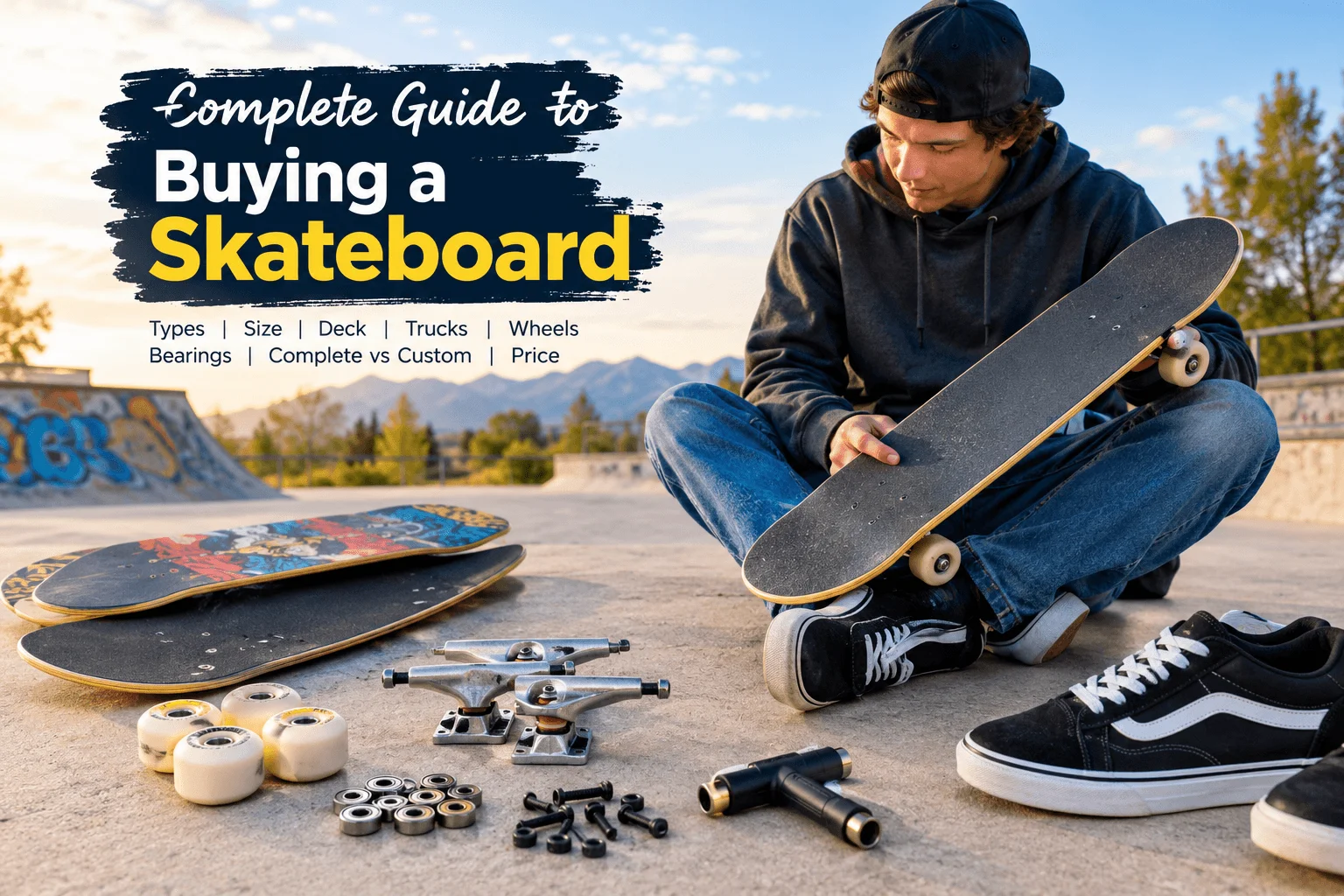
Buying a skateboard can feel confusing when you see so many skateboard types, deck sizes, wheels, trucks, and bearings. If you are buying your first skateboard, you may wonder, “What skateboard should I buy?” The right choice depends on more than appearance. Your riding style, height, shoe size, experience, and budget all play a role in finding the right setup. A good skateboard buying guide should make these choices easier, not more complicated. Whether you want a skateboard for beginners, a board for street tricks, a skatepark setup, or a comfortable cruiser, this guide will help you understand what matters. We’ll cover skateboard size, deck width, trucks, wheels, bearings, complete vs custom skateboards, quality, and price, so you can buy with confidence and avoid common beginner mistakes.
What Should You Consider Before Buying a Skateboard?
Before buying a skateboard, think about how and where you plan to ride. Your riding style is one of the most important factors. A board for street tricks may be different from one used for cruising or transportation. Your age, height, shoe size, and experience level can also affect your choice. Beginners usually need a board that feels stable and easy to control. You should also consider where you will ride, such as smooth skateparks or rough sidewalks. Finally, set a realistic skateboard budget before shopping. A very cheap board may use poor-quality parts, while an expensive setup may include features you do not need yet. Thinking about these points first makes choosing your first skateboard much easier and helps you avoid common buying mistakes.
What Type of Skateboard Should You Buy?
Choosing the right skateboard type depends on what you want to do. A street skateboard is a good choice for tricks, ledges, and technical skating. If you plan to spend time at a skatepark, a standard popsicle-style board can work well for ramps and basic tricks. A cruiser skateboard is better for comfortable rides around town, while a longboard is designed more for cruising, carving, and transportation. You may also see surfskates, which are made for a different turning style. Beginners should not choose a board only because it looks good. Think about your main goal first. If you are still learning basic skills, a stable beginner skateboard with a simple setup is often the easiest place to start. Choosing the right type can make learning more comfortable and enjoyable.
What Size Skateboard Should You Get?
Finding the right skateboard size is one of the most important steps when buying your first board. Most people start by looking at deck width, because it affects balance, control, and how the board feels under your feet. Your height, shoe size, age, and riding style can also help guide your choice. Children may feel more comfortable on smaller boards, while many adult beginners prefer a full-size deck. A wider deck can feel more stable, while a narrower deck may feel easier to move during technical tricks. There is no single perfect size for everyone. Use a skateboard size chart as a starting point rather than a strict rule. If you are unsure what size skateboard you should buy, focus on your comfort and the type of skating you want to learn.
How to Choose the Right Skateboard Deck
The skateboard deck is the main part of your board, so choosing the right one matters. Start with the deck width, especially if you are a beginner. The deck’s length and wheelbase can also affect stability and turning. You may also need to choose between a classic popsicle deck and a shaped skateboard. Popsicle decks are common for street skating and tricks, while shaped decks can suit cruising or other styles. The deck’s concave affects how your feet sit on the board and how easily you can control it. You will also see terms such as nose, tail, kicktail, and deck shape. Most quality decks use several layers of maple wood, often called seven-ply construction. Choosing the right deck size and shape can make your skateboard easier to control.
Complete vs Custom Skateboard: Which Is Better?
When buying a skateboard, you can choose a complete skateboard or build a custom skateboard from separate parts. A complete skateboard comes already assembled with a deck, trucks, wheels, bearings, and other basic hardware. This is usually the easiest choice for a beginner because the parts are already matched. A custom skateboard setup gives you more control over every component. You can select the deck width, trucks, wheels, bearings, and other parts based on your riding style. However, building your own board can cost more and may be confusing if you are new to skateboarding. For most people buying their first skateboard, a good-quality complete board is a simple starting point. Once you gain experience, you can learn which parts you prefer and move toward a custom setup.
How to Choose Skateboard Trucks
Skateboard trucks connect your deck to the wheels and help you turn and control the board. When choosing trucks, the most important thing is their width. Your trucks should match the width of your skateboard deck. Trucks that are too wide or too narrow can make the board feel harder to control. You should also consider truck height. Low trucks can feel stable, while high trucks provide more space for larger wheels. The bushings inside the trucks also affect how easily you can turn. Softer bushings usually make turning easier, while harder bushings can feel more stable. Beginners should not overthink truck features. Choose good-quality trucks that match your deck size. A properly matched truck setup gives you better balance, turning, and control while learning.
How to Choose the Right Skateboard Wheels
Your skateboard wheels have a big effect on how your board feels and where you can ride. Two important things to check are wheel size and durometer, which measures wheel hardness. Smaller, harder wheels are common for street skating and skateparks because they feel quick and responsive. Larger, softer wheels are usually better for cruising and rough roads because they roll more smoothly over cracks and small bumps. If you plan to ride mostly on smooth surfaces, standard skateboard wheels can work well. For sidewalks and everyday travel, softer wheels may provide more comfort. You should also think about wheel bite, which happens when a wheel touches the deck during a turn. Choosing the right wheel size, hardness, and setup helps create a smoother and safer ride.
Do Skateboard Bearings Really Matter?
Skateboard bearings sit inside your wheels and allow them to spin. Good bearings can help your skateboard roll smoothly, but beginners do not need to spend a lot of money on premium bearings. When shopping, you may see ABEC ratings, but a higher ABEC number does not automatically mean a better skateboard bearing. Quality, materials, construction, and proper care can matter more. Look for bearings made for skateboarding rather than choosing only by the number on the package. Keep your bearings clean and avoid getting them wet, as dirt and moisture can affect their performance. If you are buying a complete skateboard, the included bearings are often enough for learning. Later, you can upgrade them if you want a smoother or faster ride. Good bearings are useful, but they should not take most of your budget.
What Other Skateboard Parts Do You Need?
Besides the deck, trucks, wheels, and bearings, a skateboard uses several smaller parts that help everything work together. Grip tape covers the top of the deck and gives your feet enough traction to stay in place. You will also need hardware, such as bolts and nuts, to attach the trucks to the deck. Some setups use riser pads between the deck and trucks. These can help create extra space between the wheels and deck and may reduce the chance of wheel bite. Bushings are another important truck part because they affect turning and board response. If you buy a complete skateboard, most of these basic parts are already included. If you build a custom skateboard, make sure every part is compatible. Understanding these components makes it easier to maintain or upgrade your board later.
How Much Should You Spend on a Skateboard?
Your skateboard budget should match your experience and how often you plan to ride. A very cheap skateboard may look attractive, but poor-quality decks, trucks, wheels, or bearings can make learning harder. At the same time, beginners do not need the most expensive setup available. A good-quality complete skateboard is often the easiest option because the main parts are already matched. If you have a larger budget, you can invest more in important parts such as the deck and trucks rather than paying extra for features you may not need. Think about quality instead of simply choosing the lowest price. A reliable skateboard should feel stable, roll properly, and handle normal use. Spending a little more on a good setup can save you money later because you will not need to replace poor-quality parts quickly.
New vs Used Skateboard: Which Should You Buy?
A new skateboard is usually the easiest choice for beginners because you know the age and condition of every part. However, buying a used skateboard can save money if you know what to check. Look closely at the deck for deep cracks, serious damage, or signs that the wood is losing its shape. Check the trucks for major bends and make sure they turn properly. Spin each wheel and listen for rough or unusual sounds from the bearings. Also inspect the grip tape and hardware. Small scratches are normal, but major damage can affect safety and performance. If the used board needs several new parts, the cheaper price may not be worth it. For your first skateboard, a good-quality new complete board is often the safer and simpler option.
Where Is the Best Place to Buy a Skateboard?
You can buy a skateboard from a local skate shop, online store, sporting goods shop, or second-hand marketplace. For beginners, a local skate shop can be especially helpful because you may be able to compare different deck sizes and ask questions before buying. Online stores usually offer a wider selection and make it easy to compare prices, brands, and reviews. However, do not choose a skateboard only because it has a low price or attractive design. Check the deck size, trucks, wheels, bearings, and overall quality before ordering. If you are buying online, read the product details carefully and make sure you understand what is included. A trusted skate shop or reputable online seller can also make returns and warranty support easier if something goes wrong with your purchase.
How to Spot a Good-Quality Skateboard Before Buying
Knowing how to identify a good-quality skateboard can help you avoid wasting money. Start by checking the deck. It should feel solid and should not have visible cracks, major chips, or signs of poor construction. A quality deck is often made from maple wood with strong layered construction. Next, check whether the trucks match the deck width and feel properly attached. The wheels should spin smoothly, while the bearings should not make loud grinding sounds. Look at the grip tape and hardware as well. If buying a complete skateboard, check the quality of every main component rather than focusing only on the deck design. Be careful with boards that are extremely cheap or have unclear specifications. A good skateboard should feel stable, responsive, and reliable rather than simply looking attractive.
Common Skateboard Buying Mistakes Beginners Make
Beginners often make simple mistakes when buying a skateboard. One common mistake is choosing a board because of its graphics without checking the actual components. Another is buying the wrong deck size or selecting wheels that do not match the intended riding surface. Some beginners also spend too much money on premium parts they do not yet need. Others choose the cheapest skateboard and later discover that the board is difficult to control or made with poor-quality components. Buying a custom skateboard without understanding how the parts work together can also lead to compatibility problems. Before paying, think about your riding style, skateboard size, budget, and experience level. Avoid buying based only on appearance or price. Taking a few minutes to compare the parts can help you choose a better beginner skateboard.
What Safety Gear Do You Need for Skateboarding?
Learning to skateboard takes practice, and falling is a normal part of the process. Wearing the right safety gear can help reduce the risk of serious injuries while you learn. A properly fitted skateboard helmet should be your first priority, especially for beginners. You may also want knee pads, elbow pads, and wrist guards when learning basic skills or practicing at a skatepark. Make sure your shoes provide good grip and feel comfortable on the deck. Beginners should also start on a flat, open surface away from traffic and crowded areas. Do not rush into advanced tricks before learning basic balance, stopping, and turning. Good safety habits are just as important as choosing the right board. A comfortable setup combined with proper protection can make your first skateboarding experience more enjoyable and confident.
Skateboard Buying Checklist: What Should You Check Before Paying?
Before buying your first skateboard, take a final look at the complete setup. Check that the deck width and shape match your height, shoe size, and riding style. Make sure the trucks fit the deck and are securely attached. Check the wheel size and durometer based on where you plan to ride. Spin the wheels to make sure the bearings move smoothly, and inspect the grip tape and hardware. If you are buying a used board, look carefully for cracks, damaged trucks, worn wheels, and loose parts. Also compare the total price with the quality of the components. Most beginners will find a good-quality complete skateboard easier than building a custom setup from scratch. Once everything looks right, you can buy with confidence and start learning on a board that fits your needs.