
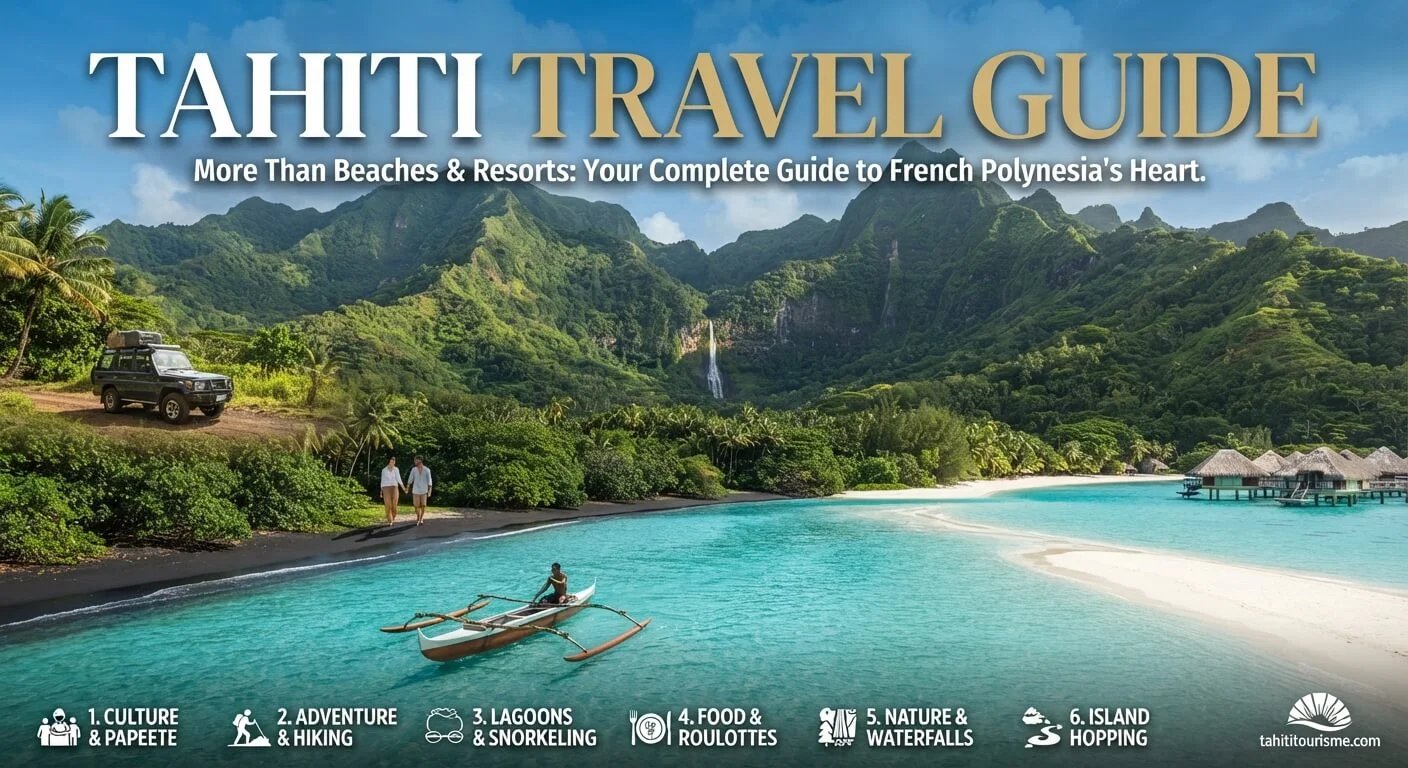
A Tahiti Travel Guide should be more than a list of beaches and resorts. Tahiti combines French Polynesian culture, volcanic mountains, lush valleys, black- and white-sand beaches, clear lagoons, waterfalls, and outdoor adventures. It is also the main gateway to other islands, including Moorea and Bora Bora.
If you are planning your first Tahiti vacation, this guide will help you understand what to expect and how to plan your trip. You’ll discover the best things to do in Tahiti, the best time to visit Tahiti, where to stay, how to get around, what to eat, and how much to budget. You’ll also find practical Tahiti travel tips, itinerary ideas, and useful advice for exploring beyond the popular tourist spots while enjoying the island at a relaxed pace.
1. Tahiti at a Glance: What First-Time Visitors Should Know
Tahiti is the largest island in French Polynesia and sits in the South Pacific within the Society Islands. Its capital, Papeete, is the main center for shopping, food, culture, and transportation. The island is known for its volcanic mountains, green valleys, waterfalls, lagoons, and black- and white-sand beaches.
For first-time visitors, Tahiti can be both a destination and a starting point for a wider French Polynesia travel experience. You can spend a few days exploring the island or use it as a gateway to Moorea, Bora Bora, and other islands. Tahiti is also a good choice if you enjoy nature, hiking, beaches, local food, culture, and outdoor activities. Even a short stopover can give you a useful introduction to island life.
2. Best Time to Visit Tahiti
The best time to visit Tahiti depends on the type of trip you want. From May to October, the weather is generally cooler and drier, with lower humidity. This period works well for beaches, hiking, snorkeling, surfing, and other outdoor activities.
From November to April, Tahiti becomes warmer and more humid. Short tropical showers can occur, but they also help create the island’s lush green scenery and full waterfalls. This period can also bring fewer crowds and different cultural experiences.
If you want to experience Tahitian culture and festivals, July is especially interesting because of Heiva i Tahiti. Whale watching is generally available from July to November, while surfing can be enjoyed throughout the year, depending on local conditions.
3. How to Get to Tahiti
Most international visitors begin their Tahiti vacation at Tahiti-Faa’a International Airport. The airport is the main international gateway and is located near Papeete. Regular flights connect Tahiti with destinations such as Los Angeles, San Francisco, Seattle, Honolulu, Paris, Tokyo, Auckland, and other Pacific locations.
When planning your trip to Tahiti, check flight schedules and prices for your travel dates because fares can change by season. After landing, you can reach your hotel by taxi, bus, rental car, or arranged transfer.
Tahiti is also an important starting point for island hopping in French Polynesia. Domestic flights leave from the same airport, while travelers heading to Moorea can use a flight or travel into Papeete for the passenger ferry. This makes Tahiti easy to include in a wider Tahiti and Moorea itinerary.
4. How to Get Around Tahiti
Knowing how to get around Tahiti will make your trip much easier. A rental car gives you the freedom to explore the coastal road at your own pace. It is especially useful if you want to visit beaches, viewpoints, waterfalls, and places outside Papeete.
You can also use Le Truck, the island’s traditional local bus service. It is a simple way to travel between Papeete and other areas while getting a closer look at local life. Taxis and ride-sharing services are also available, especially around Papeete.
For remote areas such as Papenoo Valley, a guided 4×4 tour can be more practical. If you plan to explore much of the island, booking transportation ahead can save time. Papeete itself is small enough to explore on foot.
5. Where to Stay in Tahiti
Choosing where to stay in Tahiti depends on how you want to spend your time. Papeete is useful for travelers who want easy access to restaurants, shopping, the market, museums, transportation, and city attractions. It can also work well for a short stopover before traveling to another island.
The west coast offers access to beaches, resorts, restaurants, and beautiful lagoon views. Areas farther from the capital can feel quieter and more relaxed. If you want a more peaceful setting surrounded by nature, consider areas around Tahiti Iti.
Accommodation choices include hotels, resorts, guesthouses, pensions, vacation rentals, and luxury properties. Your budget will also shape your choice. A short stay near Papeete may be convenient, while a longer Tahiti vacation can benefit from staying outside the capital. Think about your activities, transportation, and dining plans before booking.
6. Best Things to Do in Tahiti
There are many things to do in Tahiti, so you do not need to spend your entire trip at a resort. Start in Papeete, where you can visit the Papeete Market, explore shops, try local food, and experience the city’s Polynesian atmosphere.
Nature lovers can explore waterfalls, valleys, beaches, hiking trails, and lagoons. Popular experiences include visiting Pointe Venus, exploring Papenoo Valley, walking through lush areas, and discovering Tahiti’s waterfalls and gardens.
You can also add snorkeling, diving, surfing, kayaking, sailing, paddleboarding, whale watching, or a guided island tour to your Tahiti itinerary. The island offers activities for different travel styles, from relaxed beach days to active outdoor adventures.
If you have only one or two days, focus on a few places rather than trying to see everything.
7. Tahiti’s Best Outdoor Adventures and Water Activities
Tahiti is a great destination for travelers who enjoy outdoor adventures. Its mountains, valleys, waterfalls, beaches, and lagoon create many ways to stay active. Hiking in Tahiti can take you through green valleys and mountain areas, while guided tours can help you explore places that are harder to reach alone.
In the water, you can try snorkeling, scuba diving, kayaking, paddleboarding, sailing, and swimming. The lagoon is also a good place to look for tropical marine life. Tahiti offers opportunities to see turtles, rays, dolphins, sharks, and colorful fish, depending on the activity and location.
Surfing is another major experience, especially around Teahupoʻo, which is famous for its powerful waves. If you prefer a slower day, choose a lagoon trip, beach picnic, or boat tour and enjoy Tahiti’s scenery from the water.
8. Tahiti Food: What to Eat and Where to Try It
Trying Tahiti food is an important part of experiencing the island. Local cooking combines Polynesian traditions, fresh seafood, tropical produce, and French influences. One dish you should look for is poisson cru, a popular preparation of raw fish with coconut milk and other fresh ingredients.
Seafood lovers can also try local fish such as mahi-mahi, along with other fresh catches. For an easy and casual meal, look for roulottes, the local food trucks that serve different dishes in a relaxed setting. Papeete is a useful place to explore Tahitian cuisine, markets, restaurants, and street food.
The Papeete Market is another good stop for tropical fruit, fresh fish, local products, and traditional goods.
9. Tahitian Culture, History and Local Experiences
A trip to Tahiti is not only about beaches and lagoons. The island has a strong Polynesian culture that you can experience through food, music, dance, art, and local traditions. In Papeete, markets and cultural spaces offer an easy introduction to daily life. You can also learn about Tahiti’s past at the Museum of Tahiti and Her Islands.
Look for local events such as Heiva, which celebrates traditional dance, music, sports, and culture. You may also find opportunities to learn about marae, traditional Polynesian sacred sites, or visit local craft markets.
When visiting cultural places, be respectful of local customs. Support local artists, guides, restaurants, and small businesses when possible. These simple choices can make your Tahiti travel experience more meaningful while helping local communities.
10. Tahiti Travel Costs: How Expensive Is a Trip?
Many travelers ask, “Is Tahiti expensive?” The answer depends on your travel style. Flights and accommodation can take up a large part of a Tahiti vacation budget, especially during busy travel periods. Luxury resorts can also cost much more than guesthouses or local pensions.
Your main expenses usually include flights, accommodation, food, transportation, and activities. A rental car adds flexibility but also adds fuel and rental costs. Guided tours, diving, whale watching, and boat trips can increase your daily spending.
You can control your Tahiti travel cost by choosing simple accommodation, eating at local restaurants or roulottes, and planning activities carefully. Staying in one area can also reduce transportation costs. Before booking, create a daily budget that includes your hotel, meals, transportation, and activities. This gives you a clearer idea of what your Tahiti trip cost may look like.
11. Tahiti Itinerary for First-Time Visitors
The right Tahiti itinerary depends on how much time you have. With only 2 days in Tahiti, focus on Papeete, the market, a nearby beach, and one nature or cultural experience. This works well for travelers using Tahiti as a short stopover.
With 3 or 4 days, you can explore more of the island. Add places such as Pointe Venus, Papenoo Valley, waterfalls, Tahiti Iti, or a lagoon activity. A rental car can make this type of trip easier.
With 5 to 7 days, you have enough time for a slower trip and more outdoor activities. You could also use Tahiti as part of a larger French Polynesia itinerary. A popular plan is to combine Tahiti and Moorea, while travelers with more time may add Bora Bora. Avoid packing every day with activities so you still have time to enjoy the island.
12. Tahiti vs. Moorea vs. Bora Bora
Tahiti, Moorea, and Bora Bora offer different travel experiences, even though they are all part of French Polynesia. Tahiti is the largest of the three and offers a mix of city life, mountains, waterfalls, culture, beaches, hiking, and outdoor activities. It is also the main international gateway.
Moorea is close to Tahiti and is known for its dramatic mountains, lagoons, beaches, and relaxed island atmosphere. It is easy to add to a short trip because you can travel between the islands by ferry or flight. (tahititourisme.com)
Bora Bora is famous for its lagoon, mountain views, luxury resorts, and overwater bungalows. If you have limited time, consider what type of experience you want before choosing how many islands to visit. A Tahiti and Moorea itinerary can be simpler than trying to fit several islands into a short vacation.
13. Tahiti Travel Tips: What to Know Before You Go
A few Tahiti travel tips can make your first visit much easier. The local currency is the French Pacific Franc (XPF or CFP). Cards are accepted in many hotels, restaurants, and businesses, but carrying some cash is still useful for smaller purchases.
French and Tahitian are widely used, while English is common in many tourist areas. Check your power outlet and voltage requirements before leaving home, and consider an eSIM or local SIM if you need mobile internet.
Book popular tours and accommodation early, especially during busy travel periods. Bring travel insurance, protect yourself from the tropical sun, and stay hydrated during outdoor activities.
It is also useful to check current entry requirements, passport rules, and airline requirements before your trip. Rules can change, so use official sources when planning. A little preparation can help you enjoy your Tahiti vacation with fewer surprises.
14. What to Pack for Tahiti
Your Tahiti packing list should match the activities you plan to enjoy. For everyday travel, pack lightweight clothes, comfortable walking shoes, swimwear, sunglasses, and a hat. The tropical weather can be warm, so breathable clothing is useful.
If you plan to go hiking in Tahiti, bring proper walking shoes, a small daypack, a reusable water bottle, and light rain protection. For snorkeling and beach days, pack swimwear, a quick-drying towel, and suitable water shoes if needed.
A reef-safe sunscreen can help reduce harm to marine areas. Bring a small waterproof bag for phones and other valuables during boat trips or water activities.
If you visit during wetter months, add a light rain jacket. For electronics, pack your charger, power bank, and the correct travel adapter. You do not need to overpack. Most travelers will spend much of their time outdoors, so comfortable clothing is more useful than formal outfits.
15. Responsible and Sustainable Travel in Tahiti
Responsible travel can help protect the natural beauty that makes Tahiti travel special. The island’s lagoons, coral reefs, beaches, forests, and marine life are important parts of the destination. When snorkeling or diving, avoid touching coral, turtles, fish, and other marine life. Follow local rules and listen to your guide.
Reduce single-use plastic by carrying a reusable water bottle and shopping bag. Choose local restaurants, guides, tours, and small businesses when possible. This can help keep more tourism spending within the local community.
Treat cultural places with respect, especially marae and other sacred sites. Follow signs and local instructions rather than entering restricted areas.
You can also explore beyond the most popular tourist spots without damaging them. Leave natural areas clean, avoid taking shells or coral, and stay on marked trails where available. These simple habits help protect French Polynesia’s natural and cultural heritage for future travelers.