
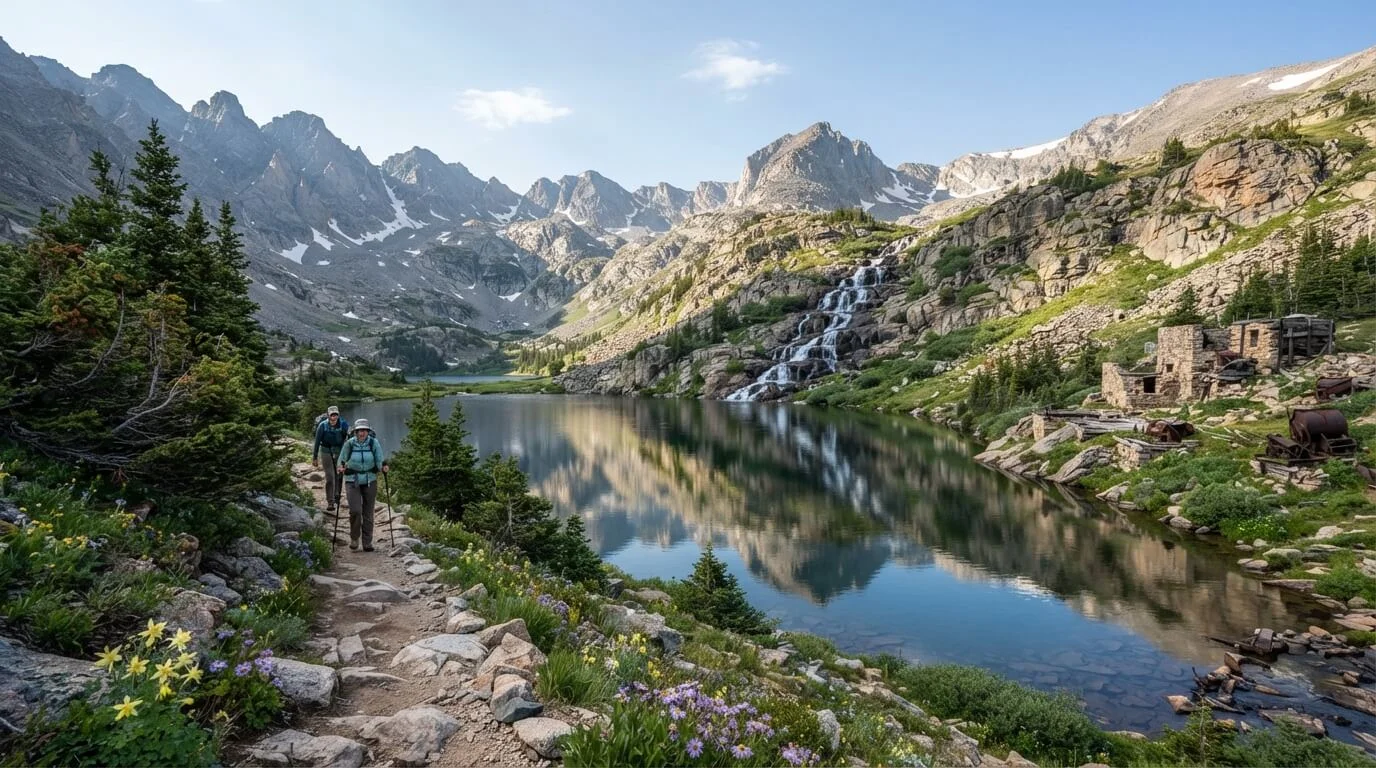
The hiking guide to Mohawk Lakes will help you plan an unforgettable adventure near Breckenridge, Colorado. This scenic destination features beautiful alpine lakes, cascading waterfalls, mountain views, and historic mining remains. The Mohawk Lakes hike follows the Spruce Creek Trail before climbing toward Lower and Upper Mohawk Lakes. Along the way, you can enjoy Continental Falls and the peaceful beauty of Colorado’s high country. Before you go, it helps to understand the trail distance, elevation gain, difficulty, parking options, and best time to visit. This guide covers everything you need to prepare, from finding the Mohawk Lakes trailhead to choosing the right hiking gear. You’ll also learn about seasonal conditions, altitude safety, and practical tips for making your Mohawk Lakes hiking experience safer and more enjoyable.
Best Time to Hike Mohawk Lakes
The best time for the Mohawk Lakes hike is usually July through September. During these months, much of the snow has melted, and the trail is often easier to follow. July brings summer wildflowers, green forests, and flowing waterfalls. August often offers good hiking conditions, although afternoon storms can develop quickly. September is a lovely time to visit if you want cooler weather and early fall colors. However, snow can remain on higher sections, even in summer. Before late June, parts of the trail may be covered in snow or ice. Winter hiking requires extra planning and knowledge of snow conditions. Always check the forecast before starting. Begin early in the day to avoid afternoon thunderstorms and give yourself enough time to return before dark.
What to Pack for the Mohawk Lakes Hike
Packing the right gear can make your Mohawk Lakes hiking adventure safer and more comfortable. The weather can change quickly at high elevations, so prepare for sunshine, wind, rain, and cold temperatures. Wear sturdy hiking shoes with good grip because parts of the trail are rocky and uneven. Bring enough water and high-energy snacks to keep you going during the climb. A small first-aid kit, sunscreen, sunglasses, and a hat are also useful. Pack a rain jacket and an extra warm layer, even on sunny days. Trekking poles can help on steep or slippery sections. Download an offline trail map before leaving, as mobile service may be limited. Carry a fully charged phone and a headlamp in case your hike takes longer than planned.
Altitude, Weather and Hiking Safety
The Mohawk Lakes Trail climbs above 12,000 feet near Upper Mohawk Lake. At this height, the air contains less available oxygen, which can make hiking harder than usual. Take your time, drink water regularly, and rest when needed. If possible, spend a day at a lower elevation before attempting this hike. Headaches, nausea, dizziness, and unusual tiredness can be signs of altitude sickness. Do not keep climbing if you develop these symptoms. Weather is another major concern. Afternoon thunderstorms can bring lightning, heavy rain, and sudden temperature drops. Start early and leave exposed areas if storms approach. Rocky sections near waterfalls may become slippery, so watch your footing. Tell someone your plans, carry an offline map, and turn back if conditions become unsafe.
Is Mohawk Lakes Suitable for Beginners and Families?
The Mohawk Lakes hike can be a rewarding adventure, but it may be challenging for beginners and young children. The trail climbs steadily, and the higher sections include steep, rocky ground. High elevation can also make even a short distance feel tiring. Beginners should consider stopping at an earlier viewpoint or choosing Lower Mohawk Lake as their main destination. Families should think about each child’s age, fitness, and hiking experience before setting out. Allow extra time for breaks, snacks, and the return journey. Keep children close near waterfalls, steep slopes, and deep water. Good shoes, warm layers, and plenty of water are essential. If this is your first high-altitude hike, choose a shorter route first. There is no need to reach Upper Mohawk Lake to enjoy the scenery.
Dogs, Camping and Fishing at Mohawk Lakes
Dogs are generally allowed on the Mohawk Lakes Trail, but owners should check current rules before visiting. Keep your dog under control, and use a leash where required or whenever it helps protect other hikers and wildlife. Bring waste bags and carry out all dog waste. The rocky route and high elevation may be tiring for some dogs, so consider your pet’s fitness before starting. Camping rules can vary by location, and the area includes sensitive alpine land and private property near parts of the access road. Do not camp wherever you find an open space. Check current White River National Forest rules and posted signs before planning an overnight stay. Fishing may be possible where regulations allow, but you must follow Colorado fishing rules and carry a valid license if required. Protect the lakes by leaving no trace.
Photography Spots, Wildlife and Historic Mining Ruins
The Mohawk Lakes hike offers many great places for nature photography. Continental Falls is a popular stop, with water flowing over rugged rocks. Mayflower Lake provides peaceful views, while Lower and Upper Mohawk Lakes offer mountain scenery and reflections when the water is calm. Early morning can bring softer light and fewer people on the trail. In summer, you may spot wildflowers along the route. Wildlife also lives in the surrounding forest and alpine areas, so look carefully without approaching or feeding animals. The trail passes historic mining remains near Mayflower Lake, offering a glimpse into Colorado’s mining past. Take photos from a safe distance and never remove old objects. Stay on marked paths, especially above the tree line, where alpine plants grow slowly and are easily damaged.
Frequently Asked Questions About Mohawk Lakes
How long is the Mohawk Lakes hike?
The round trip to Upper Mohawk Lake from the lower trailhead is roughly 7 miles, though distance varies by route and starting point.
How difficult is the Mohawk Lakes Trail?
It ranges from moderate to strenuous. The upper sections are steeper, rockier, and more demanding.
How long does the hike take?
Many hikers should allow around 4–6 hours for the return trip to Upper Mohawk Lake, depending on pace, breaks, and trail conditions.
Can beginners hike to Mohawk Lakes?
Beginners with good fitness may enjoy a shorter route, but the full hike can be challenging because of the elevation and climb.
Is parking available at the trailhead?
Yes, but spaces are limited. Arrive early and follow posted parking rules.
When is the best time to visit?
July through September is generally the best period, but always check current weather, snow, and trail conditions before setting out.