
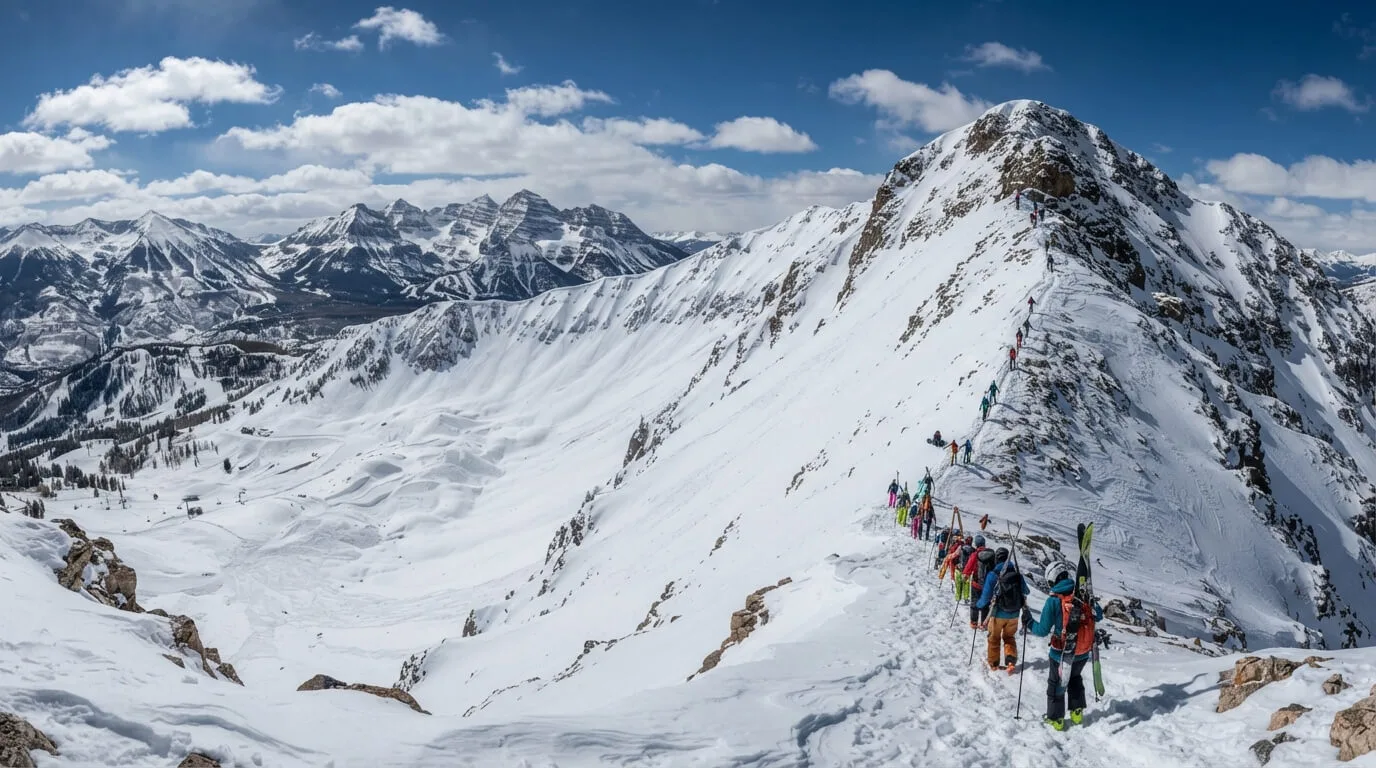
Hiking Highland Bowl in Aspen, Colorado, is an unforgettable mountain adventure for skiers and snowboarders who want to experience some of the most exciting terrain in the Rockies. Located at Aspen Highlands, Highland Bowl is famous for its steep uphill climb, stunning mountain views, and challenging ski runs. Reaching the summit takes effort, but the views of the Maroon Bells and nearby peaks make the journey special. This Highland Bowl hiking guide covers everything you need to plan your visit, including the route, elevation, hiking time, difficulty, essential gear, and safety tips. You will also learn about Heart Attack Hill, snowcat access, and the best time to visit. Remember that this winter hike leads to expert-level ski and snowboard terrain, so preparation and the right skills are essential.
Quick Answer: What to Know Before Hiking Highland Bowl
Highland Bowl is a famous hike-to ski and snowboard area at Aspen Highlands in Colorado. Its summit reaches 12,392 feet, with about 860 feet of elevation gain from the Loge Peak Lift area. The uphill hike can take around 30 minutes to 90 minutes, depending on the route and conditions. The terrain is for expert skiers and snowboarders, not beginners. Check resort access, weather, snow conditions, and safety rules before visiting.
Where Is Highland Bowl in Aspen, Colorado?
Highland Bowl is located within Aspen Highlands, a ski resort near Aspen, Colorado, in the White River National Forest area. It sits high above the resort and is known for its wide, steep slopes and impressive mountain scenery. From the summit, visitors can enjoy views of the surrounding Elk Mountains, including the famous Maroon Bells on clear days. The Bowl is part of the resort’s expert terrain and is reached by hiking uphill from the lift-served mountain. It is not a typical summer hiking destination with a simple marked trail. Most visitors come during winter to ski or snowboard after the climb. Before planning your trip, check the official Aspen Snowmass website for current opening dates, uphill access rules, and weather updates.
Highland Bowl Hike Stats: Elevation, Difficulty, and Time
Before attempting the Highland Bowl hike, understand the elevation and physical effort involved. The summit stands at 12,392 feet, while the top of the Loge Peak Lift is around 11,675 feet. The resort lists approximately 860 feet of elevation gain to reach the summit. Depending on snow, weather, route, and fitness, the hike can take about 30 minutes to 90 minutes. Some people move quickly, while others need frequent breaks. The high altitude can make even a short climb feel harder than expected. Highland Bowl is considered expert-only terrain because the downhill ski and snowboard routes are steep and challenging. The hike itself also demands balance, stamina, and care on snow. Allow extra time and never rush to keep up with others.
How to Get to Highland Bowl
To reach Highland Bowl, first travel to Aspen Highlands, located a short drive from downtown Aspen. During the winter season, visitors commonly use the resort lifts to reach the upper mountain before beginning the hike. The Loge Peak Lift takes you to the starting area for the uphill climb. From there, follow the resort’s marked route and signs toward Highland Bowl. The exact route and access can change with snow conditions, avalanche work, and resort operations. Do not cross ropes or enter closed areas, even if other people appear to be doing so. Check the official mountain report before leaving your lodging. If you are unfamiliar with the area, ask resort staff for current directions and access information. Never rely only on an old map or online trip report.
Step-by-Step: What to Expect on the Highland Bowl Hike
The Highland Bowl hike starts after you reach the upper mountain area near Loge Peak. From there, you follow the marked uphill route toward the summit. The path may be packed snow, icy sections, or a steep bootpack, depending on recent weather and how many people have climbed it. Move at a steady pace, leave space for other hikers, and stop when you need a break. As you gain height, the air becomes thinner, and the climb may feel harder than expected. Keep an eye on changing clouds, wind, and visibility. Once you reach the top, take time to check the terrain and your planned descent. The uphill climb is only part of the experience; the ski or snowboard descent requires expert ability and careful judgment.
Heart Attack Hill: The Steepest Part of the Ascent
Heart Attack Hill is the well-known nickname for a demanding part of the Highland Bowl ascent. The climb can feel especially tough because the slope is steep and the air is thin at high altitude. Even fit hikers may need to pause, catch their breath, and drink water. Take short, steady steps instead of trying to reach the top too quickly. Keep a safe distance from people above and below you, as loose snow or dropped equipment can create hazards. Proper footwear and suitable winter gear are important for staying comfortable and secure. If you feel dizzy, sick, unusually weak, or short of breath, stop and assess how you feel. Do not push through serious symptoms just to reach the summit. Reaching the top safely matters more than speed.
Reaching Highland Peak: Summit Views and Photo Spots
Reaching Highland Peak, at about 12,392 feet, is a memorable part of the Highland Bowl experience. From the top, you can see rugged Colorado peaks, snowy ridgelines, and wide mountain views when the weather is clear. The Maroon Bells and nearby peaks may be visible, making the summit a great place for photos. However, conditions can change quickly at this elevation. Strong wind, blowing snow, and low visibility may limit the view or make it unsafe to stay for long. Keep your gloves on while taking pictures and secure your phone or camera so it cannot slip onto the slope. Do not stand in the way of other people preparing to descend. Once you have enjoyed the view, check your equipment and plan your next move carefully.
Is Highland Bowl Difficult for Beginners?
Highland Bowl is not suitable for beginner skiers or snowboarders. Although the uphill climb may look manageable to experienced hikers, the main challenge is the descent. The Bowl contains steep, demanding terrain that requires strong skiing or snowboarding skills, good balance, and the ability to handle changing snow. Some routes are extremely challenging, and conditions can make them even harder. Beginners should not attempt the descent simply because they completed the hike. Intermediate visitors should also be honest about their abilities and seek advice from qualified resort staff. If you are new to winter sports, enjoy easier runs at Aspen Highlands instead. You can still experience the resort’s mountain views and atmosphere without taking on expert terrain. Choose a route that matches your skills, not the expectations of a group.
What to Pack for Hiking Highland Bowl
Packing the right gear helps make your Highland Bowl hike safer and more comfortable. Wear warm layers that you can adjust as your body temperature changes during the climb. A waterproof outer layer, insulated gloves, a warm hat, and suitable winter boots are useful in cold or snowy conditions. Bring water and a small snack, as exercise at high altitude can quickly use your energy. Sunglasses or goggles can protect your eyes from bright snow and blowing wind. If you plan to ski or snowboard down, carry your equipment safely and use the proper gear for the conditions. Some visitors use a ski-carrying backpack or equipment straps to keep their hands free. Pack a charged phone, but do not rely on it as your only safety tool. Check the forecast before choosing what to bring.
Weather, Altitude, and Safety Tips for Highland Bowl
Weather and altitude are major factors when hiking Highland Bowl. At more than 12,000 feet, the air contains less available oxygen, so the climb can feel harder than expected. Take your time, drink water, and avoid pushing yourself beyond your limits. Snow, wind, cold temperatures, and poor visibility can change the route quickly. Check the resort’s snow report and access notices before setting out, and follow all signs and closures. Avalanche control work may affect access, even when the weather looks good. Wear suitable layers and protect exposed skin from wind and cold. If you develop a headache, dizziness, nausea, or unusual weakness, stop and take the symptoms seriously. In an emergency, contact ski patrol when available. Never enter closed terrain or assume a route is safe because other people are using it.
Highland Bowl Snowcat: Cost, Access, and Time Saved
A snowcat may help some visitors reduce the uphill effort at Highland Bowl when the service is operating. Snowcat access, pickup points, operating times, and prices can change during the season, so do not assume a ride is available on your visit. Check the current information from Aspen Snowmass before making plans. Even when a snowcat is available, you should be prepared for some walking and for changing snow conditions. The remaining climb can still feel challenging because of the high elevation. A ride also does not make the downhill terrain suitable for beginners. You must still have the skiing or snowboarding skills needed for the route you choose. Confirm the latest service details directly with the resort rather than relying on old blog posts or past prices.
Best Time to Visit Highland Bowl
The best time for the Highland Bowl hike depends on snow conditions, resort operations, and your plans for skiing or snowboarding. Most visitors go during the winter ski season, when Aspen Highlands manages access to the Bowl and opens terrain as conditions allow. Fresh snow can make the experience exciting, but storms may also bring poor visibility, strong winds, and avalanche concerns. A sunny day may offer better views, although weather can change quickly at high elevation. The Bowl is not a standard summer hiking trail, so do not assume winter routes remain open or safe once the snow melts. Before travelling, check the official resort opening dates, lift status, snow report, and access rules. The best day is one when the route is officially open and conditions match your ability.
Parking, Lift Tickets, and Transportation to Aspen Highlands
If you are planning a visit to Aspen Highlands, check parking and lift details before you arrive. The resort is a short drive from Aspen, and local transport options may be available depending on the season and schedule. Parking rules, fees, and spaces can change, so review current information from the resort or local transport service. You may need a valid lift ticket or pass to ride the Loge Peak Lift. If you plan to hike uphill independently rather than use lifts, separate uphill access rules may apply. Aspen Snowmass has required an Uphill Pass for on-resort uphill travel, with designated routes and temporary closures possible. These rules are different from access to the Bowl’s ski terrain. Confirm the requirements for your exact date before leaving, and keep your pass or ticket ready when needed.
Highland Bowl Ski Zones: What to Know Before the Descent
Highland Bowl includes different ski zones, and the route you choose must match your experience and the day’s snow conditions. The terrain is known for double-black-diamond runs, steep slopes, and challenging lines. Areas and route names can include the G Zones, while other sections may have more extreme features. Do not choose a descent based only on its name or on what other skiers are doing. Read the resort trail map, follow posted signs, and ask ski patrol or qualified staff for current advice. Some sections may be closed because of avalanche control or other safety work. Never cross a rope or enter a closed area. If you are unsure about a line, choose a safer option or do not descend. Reaching the summit does not mean every route down is within your ability.
Can You Hike Highland Bowl in Summer?
Highland Bowl is best known as a winter ski and snowboard destination, not a regular summer hiking trail. When the snow melts, winter routes, access points, and resort services may no longer operate in the same way. Do not assume you can follow the winter bootpack in summer or that the area is open for general hiking. Mountain terrain can include steep slopes, loose rock, changing weather, and areas without a maintained trail. If you want to explore near Aspen during warmer months, look for established summer trails and check official maps, conditions, and access rules. Contact Aspen Snowmass or local land managers before planning a summer trip to Highland Peak itself. Choose a marked trail suited to your fitness and experience, and carry enough water, layers, and navigation tools for mountain conditions.
Frequently Asked Questions About Hiking Highland Bowl
How long does it take to hike Highland Bowl?
The climb can take 30 minutes to 90 minutes, depending on snow, route, fitness, and conditions. Allow extra time for breaks and changing weather.
How high is Highland Bowl?
The summit of Highland Bowl is about 12,392 feet above sea level, making altitude an important factor in your plans.
How difficult is the Highland Bowl hike?
The climb is steep and physically demanding. The downhill terrain is expert-only, so it is not suitable for beginner skiers or snowboarders.
Do you need a lift ticket for Highland Bowl?
A valid lift ticket or pass is generally needed to ride resort lifts. Uphill travel may require a separate Uphill Pass. Check current rules before visiting.
Is there a snowcat at Highland Bowl?
Snowcat service may be available under certain conditions, but service details and prices can change. Confirm availability directly with Aspen Snowmass.
Can you hike Highland Bowl in summer?
Highland Bowl is mainly a winter ski and snowboard area. Check with the resort or local land managers before attempting summer access.
Conclusion
Hiking Highland Bowl is a memorable mountain experience for people who are prepared for steep climbing, high elevation, and changing winter conditions. The summit views, the challenge of the uphill route, and the famous expert ski terrain make it a special destination near Aspen, Colorado. However, reaching the top is only one part of the adventure. You also need suitable equipment, a careful plan, and the skiing or snowboarding ability to handle the descent. Before your visit, check the latest Aspen Highlands snow report, access rules, lift status, and weather forecast. Never enter closed terrain or push beyond your ability. With the right preparation and a strong focus on safety, you can make a better-informed decision about whether Highland Bowl is the right mountain adventure for you.