
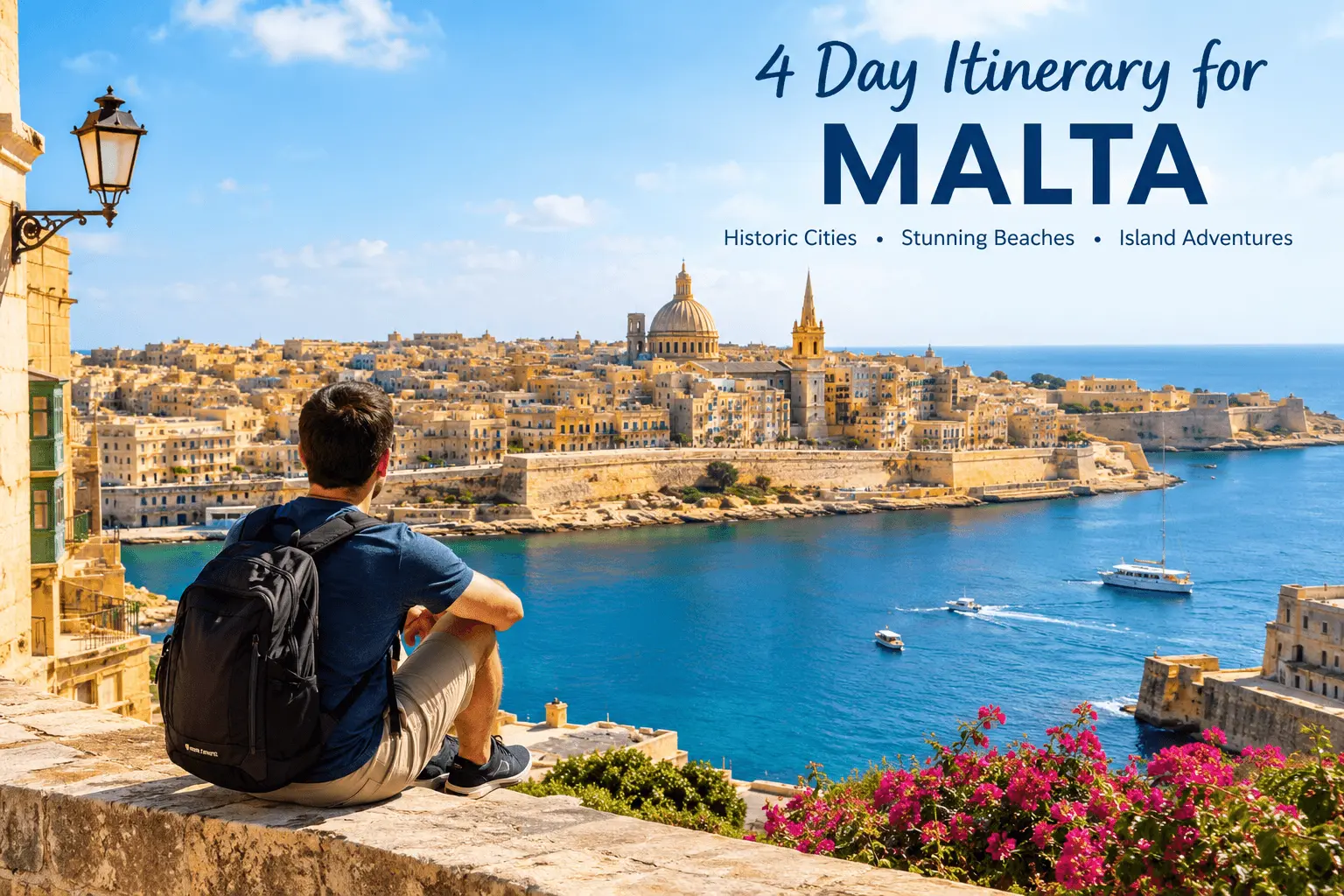
Planning a trip to Malta and wondering how much you can see in four days? This small Mediterranean island is full of historic cities, beautiful beaches, clear blue waters, and charming coastal villages. With the right plan, a 4 day itinerary for Malta can help you experience the island’s best highlights without feeling rushed.
You can explore the narrow streets of Valletta, step back in time in Mdina, enjoy local food in traditional villages, and take a memorable day trip to Gozo or Comino. Whether you are visiting Malta for the first time, traveling as a couple, or planning a short family getaway, this guide will help you make the most of your stay. Here’s how to spend four days in Malta with practical tips for transport, sightseeing, food, and budgeting.
Quick Answer
The best way to spend four days in Malta is to explore a different part of the island each day. Start with Valletta and the Three Cities, then visit Mdina, Rabat, and Dingli Cliffs. Spend your third day exploring Gozo or Comino, depending on whether you prefer historic villages or swimming in clear blue water.
Finish your trip with Malta’s southern coast, including the Blue Grotto or Marsaxlokk fishing village. Stay in Valletta, Sliema, or another well-connected area to reduce travel time. You can explore Malta using public buses, ferries, and taxis, so renting a car is not essential. Book popular boat trips ahead, especially during summer, and leave room for relaxed meals and beautiful coastal views.
Day 1: Explore Valletta and the Three Cities
Start your Malta itinerary in Valletta, the island’s historic capital. Walk through its narrow streets, admire old buildings, and visit St John’s Co-Cathedral if you enjoy art and history. Next, head to Upper Barrakka Gardens, where you can enjoy lovely views across the Grand Harbour. Stop for lunch at a local café and try a traditional Maltese ftira or pastizzi. In the afternoon, take a ferry or another suitable connection across the harbour to explore the Three Cities: Vittoriosa, Senglea, and Cospicua.
Their quiet streets, waterfront paths, and historic buildings offer a different feel from busy Valletta. Return to Valletta or Sliema for dinner. This first day combines culture, local food, and scenic views without requiring a long journey.
Day 2: Visit Mdina, Rabat, and Malta’s Scenic Coast
Spend your second day exploring Mdina, often called the Silent City. Its stone walls, quiet lanes, and old buildings make it one of the most memorable places to visit in Malta. Arrive in the morning to enjoy the peaceful streets before larger groups arrive. Then walk to nearby Rabat, where you can explore local cafés and historic sites such as St Paul’s Catacombs, checking opening times before visiting.
Enjoy lunch in Rabat before heading toward Dingli Cliffs for wide views of the Mediterranean Sea. If you have extra time and suitable transport, you could visit a nearby countryside spot or coastal viewpoint. Wear comfortable shoes because some streets are uneven.
This day is ideal for travelers who love history, photography, traditional towns, and beautiful landscapes.
Day 3: Take a Day Trip to Gozo or Comino
For day three, choose between Gozo and Comino based on your travel style. Gozo is a great choice if you enjoy quiet villages, coastal scenery, history, and local food. Take the ferry from Malta and explore Victoria’s Citadel, then visit places such as Dwejra Bay or Ramla Bay if time and transport allow. Alternatively, choose Comino for its famous Blue Lagoon, known for clear turquoise water.
Boat trips can be popular, especially in summer, so check current access rules and book any required visit in advance. Comino is better for swimming and sea views, while Gozo offers more places to explore on land. With only four days in Malta, trying to visit both islands in one day may feel rushed.
Day 4: Discover Malta’s Beaches and Southern Coast
Use your final day to enjoy Malta’s beaches and southern coast. Begin at the Blue Grotto, where boat trips may offer views of sea caves and bright blue water when conditions are suitable.
Check the weather and local boat services before traveling. Next, visit the nearby Ħaġar Qim and Mnajdra temples if you are interested in ancient history. In the afternoon, head to Marsaxlokk, a colorful fishing village known for its traditional boats and waterfront restaurants. Enjoy a relaxed lunch or early dinner featuring fresh seafood or another Maltese dish.
If swimming is your priority, you could choose St Peter’s Pool instead, but check access and sea conditions. This flexible final day lets you enjoy Malta’s coast without squeezing in too many stops.
Where to Stay in Malta for Four Days
Choosing the right base can save valuable time during your four-day Malta trip. Valletta is ideal for travelers who love history, restaurants, and easy access to harbor ferries.
It is a good choice if you want to explore the capital on foot. Sliema offers a lively waterfront, shops, cafés, and useful transport connections. St Julian’s suits visitors looking for nightlife, dining, and a busy evening atmosphere. For a quieter beach-focused stay, consider Mellieħa, although reaching some southern attractions may take longer. Before booking, check how close your hotel is to bus stops or ferry terminals.
Compare the total cost, including transport, rather than choosing accommodation based on room price alone. For a short Malta itinerary, a well-connected location is often worth paying a little extra for.
How to Get Around Malta in Four Days
You can explore Malta without renting a car. Public buses connect many towns and tourist attractions, although journeys may take longer during busy periods.
Check current routes and schedules before setting out, especially when visiting places outside the main towns. Ferries can make travel between Valletta, Sliema, and the Three Cities easier and more scenic. For trips to Gozo, use the appropriate ferry service and allow extra time for waiting and transfers.
Taxis and ride-hailing services can help when buses are inconvenient, particularly in the evening. Renting a car offers more freedom for places such as Dingli Cliffs and remote beaches, but parking and narrow roads can be challenging. For most first-time visitors, combining buses, ferries, walking, and occasional taxis is a practical approach.
What to Eat in Malta: Food and Restaurant Guide
Trying local dishes is an important part of any Malta travel guide. Start with pastizzi, small pastries commonly filled with ricotta or peas, which make an easy snack while sightseeing.
Try ftira, a traditional Maltese bread that is often served with tuna, tomatoes, olives, or other fillings. If you enjoy hearty meals, look for rabbit stew, a well-known Maltese dish. Fresh seafood is another good choice, especially around Marsaxlokk, where waterfront restaurants offer local fish dishes. For dessert, explore traditional sweets in bakeries and cafés. You do not need to eat at expensive restaurants for every meal; bakeries and casual cafés can help keep costs down. Ask about daily specials, local ingredients, and portion sizes.
Exploring Maltese food adds another memorable layer to your four-day adventure.
Best Time to Visit Malta for a Four-Day Trip
The best time to visit Malta depends on what you want from your trip. Spring, from March to May, often brings comfortable sightseeing weather and colorful countryside.
Summer, from June to August, is popular for swimming, boat trips, and beach days, but temperatures, crowds, and accommodation prices can be higher.
September and October can be appealing for warm sea conditions and a more relaxed atmosphere, although weather can change. Winter is usually quieter and may suit travelers who prefer historic towns, museums, and lower-season travel, but some boat trips and beach activities may be affected by wind or rough seas.
For a balanced Malta four-day itinerary, spring and early autumn are worth considering. Whatever month you choose, check the forecast and keep a flexible plan for outdoor activities.
How Much Does a Four-Day Trip to Malta Cost?
The cost of four days in Malta depends on your travel dates, accommodation, food choices, and activities.
Budget travelers can save by staying in a simple guesthouse, using public buses, and eating at bakeries or casual cafés. Mid-range travelers may prefer a comfortable hotel, restaurant meals, and a few paid attractions or boat trips. Luxury stays and private tours will increase the total. Remember to include airport transfers, ferry fares, entry tickets, snacks, and any required island-trip bookings in your budget.
Summer prices can be higher, so compare accommodation rates before choosing your dates. Rather than relying on one fixed estimate, calculate your expected daily spending and leave some money for unexpected costs. Booking popular activities early can also help you plan your expenses with fewer surprises.
Practical Malta Travel Tips Before You Go
A little preparation can make your Malta travel itinerary much easier. Pack comfortable walking shoes because historic streets can be uneven, and bring sun protection during warmer months. Carry a reusable water bottle and check local advice about drinking water and refill options. Keep some flexibility in your schedule because buses, ferries, and boat trips can be affected by traffic or weather.
If you plan to visit St John’s Co-Cathedral, archaeological sites, or popular boat attractions, check current opening times and ticket requirements. Dress respectfully when visiting religious buildings. Save offline maps and confirm your route before leaving your accommodation. Malta uses the euro, and card payments are widely accepted, although it is useful to carry a little cash. Most importantly, avoid packing every day with activities; allow time to enjoy the island at your own pace.
Common Mistakes to Avoid on a Four-Day Malta Trip
One common mistake is trying to visit Gozo and Comino on the same day while also exploring Malta’s main island. With only four days, this can leave little time to enjoy either destination. Another mistake is underestimating travel times between towns, beaches, and attractions.
Check bus routes and ferry schedules before planning several stops in one day. Do not assume that every beach or boat trip will be suitable in all weather conditions. During summer, popular attractions can be crowded, so arrange important bookings ahead of time. Choosing accommodation far from your planned activities may also add unnecessary travel costs. Finally, avoid spending the entire trip sightseeing without enjoying local food or taking breaks.
A well-planned Malta itinerary balances famous attractions with relaxed meals, scenic walks, and time to explore.
Frequently Asked Question’s
Is four days enough to visit Malta?
Yes. Four days are enough to explore Valletta, Mdina, the coast, and either Gozo or Comino. You will not see everything, but a good route covers many highlights.
Can I explore Malta without a car?
Yes. Buses, ferries, walking, and taxis can take you to many popular attractions. A car may help with remote locations but is not essential.
Should I visit Gozo or Comino?
Choose Gozo for villages, history, and varied landscapes. Choose Comino for the Blue Lagoon and a day focused on clear water and boat trips.
Where should I stay in Malta?
Valletta and Sliema are convenient for many first-time visitors. St Julian’s suits nightlife, while Mellieħa is a good option for a quieter beach-focused stay.
What should I book before arriving?
Consider booking accommodation and popular activities in advance. Check current Blue Lagoon access requirements, ferry details, and attraction opening times before your trip.
Conclusion
A complete 4 day itinerary for Malta gives you a great introduction to the island’s historic towns, beautiful coastline, and relaxed Mediterranean lifestyle. Spend your first day exploring Valletta and the Three Cities, discover Mdina and Rabat on day two, and choose Gozo or Comino for your island adventure.
Use your final day to enjoy the southern coast, local food, and scenic views. Plan your transport and accommodation carefully, but leave some free time for unexpected discoveries. Malta is small, yet each area offers something different, from ancient temples to lively waterfronts. With a little preparation and a flexible schedule, you can enjoy a memorable trip without rushing from one attraction to another.
Plan smart, travel at your own pace, and make every day in Malta count.