
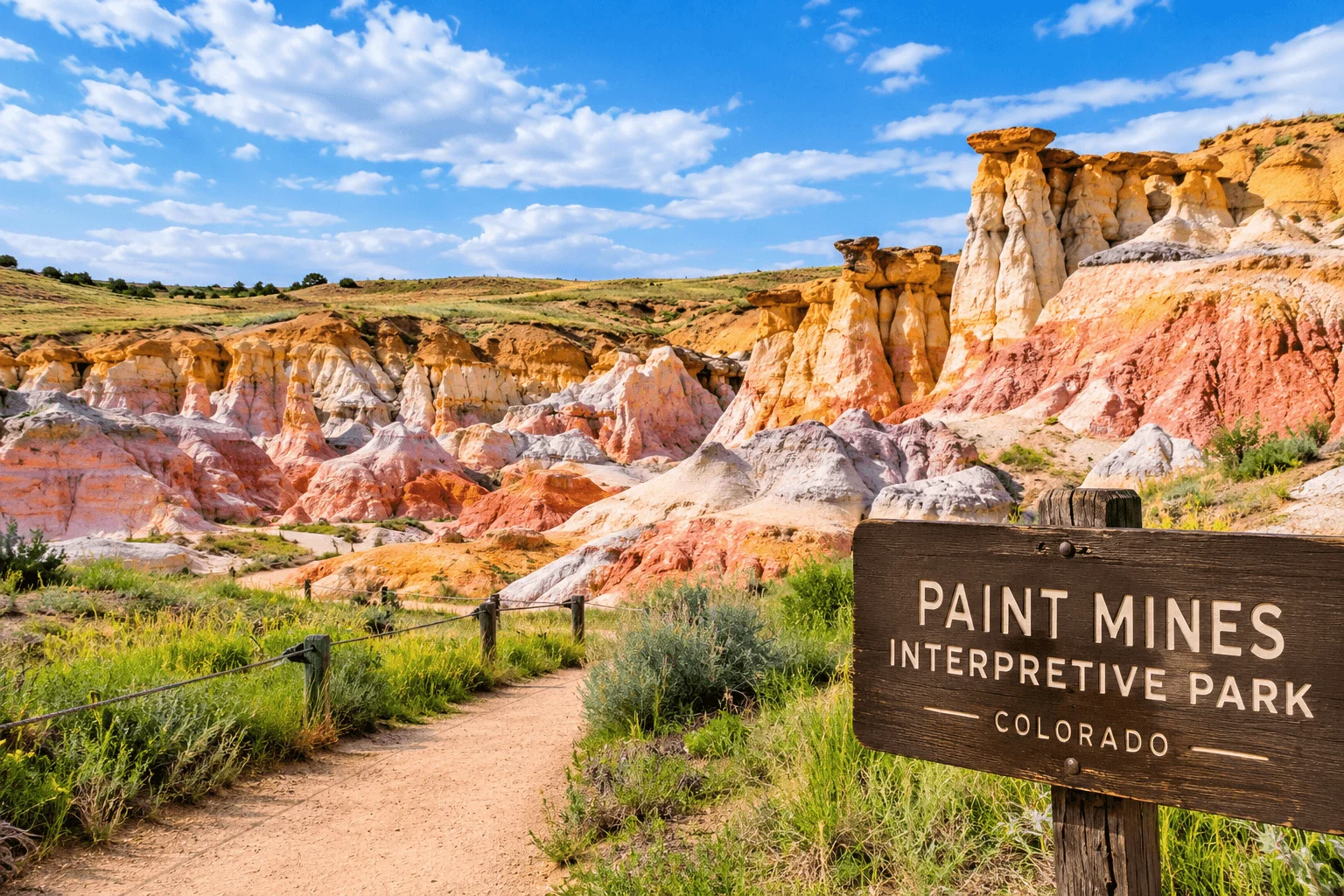
If you are looking for a unique outdoor escape in Colorado, Paint Mines Interpretive Park Colorado is a place worth adding to your itinerary. Located near Calhan, Colorado, this unusual landscape is known for its colorful clay formations, tall hoodoos, narrow spires, and open prairie views. The park offers an easy-to-moderate hiking experience that feels very different from the mountain trails around Colorado Springs.
During a visit, you can explore the Paint Mines hiking trails, learn about the area’s geology and history, and enjoy some excellent landscape photography. The colorful formations were shaped by erosion over thousands of years and also have deep archaeological importance.
This Paint Mines Colorado guide covers the trails, parking, best time to visit, photography, history, geology, safety rules, and practical tips to help you plan your trip.
Paint Mines Interpretive Park at a Glance
Paint Mines Interpretive Park covers about 750 acres near Calhan in El Paso County. The park is free to visit and is generally open from dawn to dusk throughout the year. Visitors come here to hike, photograph the unusual formations, and enjoy the quiet Colorado grassland.
The park has about four miles of trails, with colorful clay walls, hoodoos, spires, gullies, and open prairie along the way. The main hiking routes are generally considered manageable for visitors who are comfortable walking on uneven ground. There is also a restroom near the main entrance, but water is not provided, and shade is limited.
If you plan a visit, bring plenty of water, sun protection, and comfortable shoes. Dogs, bikes, horses, and drones are not allowed in the park.
Where Is Paint Mines Interpretive Park?
Paint Mines Interpretive Park is located near Calhan, Colorado, northeast of Colorado Springs. Its location on the eastern side of the Pikes Peak region makes it an easy addition to a Colorado road trip. The park is surrounded by open prairie, so the landscape feels much more open than the mountain areas closer to Colorado Springs.
The official address is 29950 Paint Mine Road, Calhan, Colorado. From Colorado Springs, you can drive east and then north toward Calhan before continuing to Paint Mine Road. Travelers coming from Denver, Pueblo, or other Front Range cities can also reach the park by road.
Because the park sits outside a large city, you should plan ahead for water, food, fuel, and phone service. There are fewer services near the park than in Colorado Springs.
How to Get to Paint Mines Interpretive Park
Getting to Paint Mines Interpretive Park Colorado is fairly simple, but the final part of the drive feels different from a normal city attraction. After leaving the main roads near Calhan, you will continue toward Paint Mine Road and the park entrance. The final approach includes a maintained county dirt road, so expect a slower drive than you would on a paved highway.
Before leaving Colorado Springs, check your fuel level and bring enough water and snacks. The park itself does not provide drinking water. A navigation app can help, but it is still smart to know the general route before you start driving.
Once you arrive, follow the signs for the available parking areas. Drive carefully on the dirt road, especially after rain or snow. Road conditions can change with weather, so allow extra time when conditions are poor.
Paint Mines Interpretive Park Hiking Trails
Hiking is one of the main reasons people visit Paint Mines Colorado. The park has a network of trails that leads through open grassland and into the colorful formations. Along the way, you can see hoodoos, clay spires, gullies, and eroded walls that give the area its unusual look.
The trail system includes the Paint Mines Interpretive Trail, with connected routes that let visitors choose how much of the park they want to explore. Trail distances can vary depending on the route you take, so it is better to check the current trail map before starting.
The hike is not a mountain climb, but the ground can be uneven. Some parts may feel more challenging in hot, windy, muddy, or snowy weather. Wear comfortable hiking shoes, carry water, and stay on marked trails to protect the fragile formations.
What Is the Paint Mines Trail Like?
The Paint Mines trail offers a gradual change in scenery. At first, you may walk through open prairie with wide views around you. As you continue, the landscape becomes more dramatic. You begin to see colorful clay walls, narrow gullies, tall hoodoo formations, and pointed spires rising from the ground.
One of the best parts of the hike is seeing how the formations appear from different angles. Light can also change the colors of the clay, making the landscape look different during the day.
The trail includes interpretive areas where visitors can learn more about the park’s geology and human history. You may also reach viewpoints such as the Paint Mines Overlook, depending on your route.
The terrain is mostly easy to moderate, but uneven surfaces mean you should watch your footing.
Where to Park at Paint Mines
Parking is an important part of planning a visit because Paint Mines Interpretive Park has several parking areas. The main options include the Main Parking Lot, Overlook Parking Lot, and Upper Parking Lot. Each area can provide access to different parts of the trail system.
The Main Parking Lot is near the primary entrance and is a useful starting point for many visitors. It also provides access to the main restroom. The Overlook Parking Lot can be useful if you want quicker access to scenic areas, while the Upper Parking Lot provides another starting point for exploring the park.
Parking choices can affect how much you walk and which part of the trail you see first. Check current signs when you arrive, and always park only in designated areas. Do not block roads or trail access points.
What are the Paint Mines?
The Paint Mines are a collection of colorful clay formations shaped by natural erosion. Instead of the large mountain rocks found in many Colorado parks, this landscape is made up of soft clay, exposed earth, gullies, and tall narrow formations.
The area contains hoodoos, spires, colorful clay walls, and badland-like features surrounded by open grassland. These formations give the park its name and make it one of the more unusual hiking destinations near Colorado Springs.
The colors can include shades of red, pink, orange, yellow, white, and purple. Their appearance comes from minerals in the ground and changes caused by natural weathering.
Water and wind have slowly shaped the land over time. As softer material eroded away, the harder sections remained as tall clay spires and hoodoos. This ongoing process is a major part of what makes the Paint Mines landscape so interesting.
Why are the Paint Mines So Colorful?
The bright colors at Paint Mines Colorado come from the minerals found in the clay and surrounding rock. Iron compounds play an important role in creating many of the red, orange, pink, and yellow shades you see throughout the formations.
Other natural materials, including selenite and jasper, also occur in the area. Over time, water and wind have exposed different layers of material. This natural erosion created the narrow spires, gullies, and unusual shapes that visitors see today.
Sunlight can make the colors look stronger at certain times of day. After rain, the clay can also look darker and richer, although wet conditions may make the trail muddy and harder to walk.
The geology is one reason the park is more than just a scenic hike. A walk through the Paint Mines geological formations gives visitors a simple way to see how erosion can reshape a landscape over time.
Paint Mines History and Archaeology
The Paint Mines history goes back thousands of years. Evidence shows that people used this area for nearly 9,000 years, making it important from both a cultural and archaeological point of view.
Indigenous people collected colorful clay and other natural materials from the area. These materials could be used for paint, pottery, and other purposes. The colorful earth helped give the site its name.
The history continued beyond its early Native American use. Clay from the area was later connected with brick production and other local industries. The site also has a connection with Van Briggle Pottery, an important part of Colorado Springs’ pottery history.
Today, visitors can learn about this past through interpretive information around the park. The formations are therefore not only a natural attraction. They also represent a long record of human use, geology, and archaeology in Colorado.
Best Time to Visit Paint Mines Interpretive Park
The best time to visit Paint Mines depends on what you want to do. Spring and fall can offer comfortable temperatures for hiking, while summer gives you longer daylight but can become hot because there is very little shade.
Fall can be especially pleasant for walking and photography. Winter can create a completely different view when snow covers parts of the prairie and formations, but cold temperatures and changing trail conditions require extra preparation.
Morning and late afternoon can be good times for Paint Mines photography because lower sunlight can add depth to the clay formations. Cloudy days can also create soft light that works well for landscape photos.
Always check the weather before your trip. Strong wind, heavy rain, or snow can change trail conditions. After rain, clay surfaces may become slippery or muddy, and some low areas can hold water.
Paint Mines Photography Guide
Paint Mines photography is popular because the landscape has colors and shapes that are very different from typical Colorado scenery. The best photo opportunities include the hoodoos, clay spires, gullies, and the Paint Mines Overlook.
Morning and late afternoon can provide softer light and longer shadows. Golden hour can make the red, orange, pink, and yellow clay appear warmer. Overcast weather can also work well because soft light reduces harsh shadows.
A wide-angle lens can help capture the formations and surrounding prairie in one frame. A smaller lens can be useful when you want to focus on details in the clay.
Remember that photography should follow park rules. Stay on designated trails and do not climb the formations for a better photo. Drones are prohibited, while commercial photography and some specialized shoots may require permission or a permit. Protecting the landscape should always come before getting a picture.
What to Bring to Paint Mines
A little preparation can make your Paint Mines hiking experience much easier. The most important item to bring is plenty of water because there is no drinking water available inside the park. The open landscape also has very little shade, so pack sunscreen, sunglasses, and a hat.
Wear comfortable hiking shoes with good grip. Some parts of the trail have uneven ground, loose soil, or clay surfaces that can become slippery after rain. Bring light layers so you can adjust to changing temperatures and wind.
A small backpack can hold snacks, water, a phone, a camera, and basic weather protection. If you plan to enjoy Paint Mines photography, bring extra batteries or a power bank.
Before leaving, check the weather forecast. A light jacket can be useful even on warmer days because the open prairie can become windy.
Paint Mines Rules and Safety Tips
Following the Paint Mines rules helps protect both visitors and the fragile landscape. Stay on marked trails and avoid walking through restricted areas. The clay formations can look strong, but they are easily damaged by climbing, touching, or walking across them.
Climbing and scrambling on the formations are not allowed. Do not remove rocks, clay, plants, artifacts, or other natural materials. The park also does not allow dogs, bikes, horses, or drones.
Wet weather needs extra care. Rain can make the clay trails slippery and may cause water to collect in gullies. Avoid entering these areas during unsafe conditions.
Because there is little shade, sun exposure and heat can become problems during summer. Carry enough water and take breaks when needed. Practicing Leave No Trace principles also helps keep Paint Mines Colorado clean and enjoyable for future visitors.
Things to Do Near Paint Mines Interpretive Park
A visit to Paint Mines Interpretive Park can easily become part of a larger Colorado Springs day trip. After exploring the clay formations, you can continue toward several well-known attractions in the Pikes Peak region.
Garden of the Gods is a popular place to see large red rock formations, while Pikes Peak offers mountain scenery and high-elevation views. You can also visit Manitou Springs, a historic mountain town with shops, restaurants, and outdoor attractions.
Another nearby option is Cave of the Winds, where visitors can explore an underground cave system and learn about the area’s geology.
If you have a full day, consider combining the Paint Mines hiking trail with one or two attractions around Colorado Springs. Start early, especially during warmer months, so you have enough time for hiking and sightseeing without rushing between locations.
Frequently Asked Questions About Paint Mines
Is Paint Mines Interpretive Park worth visiting?
Paint Mines Interpretive Park offers a landscape that looks very different from many other Colorado destinations. Its colorful clay formations, hoodoos, prairie views, geology, and history make it an interesting stop for hikers, photographers, and curious travelers.
Is Paint Mines free?
Yes. The park has free admission, making it an easy addition to a Colorado road trip or day trip from Colorado Springs.
How long is the Paint Mines hike?
The park has a trail network covering about four miles. Your actual hiking distance depends on the route and parking area you choose. Allow extra time for photos and exploring.
Are dogs allowed at Paint Mines?
No. Dogs and other pets are not allowed in the park.
Can you climb the Paint Mines formations?
No. Visitors must stay on designated trails and cannot climb, scramble on, or enter the formations.
What is the best season to visit?
Spring and fall often provide comfortable hiking weather. Summer can be hot, while winter brings colder conditions and possible snow.
Conclusion
Paint Mines Interpretive Park Colorado is a unique destination for travelers who want to experience a different side of the state. Instead of towering mountain peaks, you will find colorful clay, narrow spires, hoodoos, open prairie, and unusual geological formations.
The park is especially appealing to hikers, photographers, families, and visitors interested in Colorado geology and history. Its location near Calhan also makes it practical for a day trip from Colorado Springs.
Before visiting, check the weather and prepare for limited shade and no drinking water. Wear suitable shoes, bring plenty of water, and follow all park rules. Most importantly, stay on the trails and protect the fragile formations.
With a little planning, your Paint Mines hiking trip can be a relaxed way to explore one of Colorado’s most unusual landscapes.