
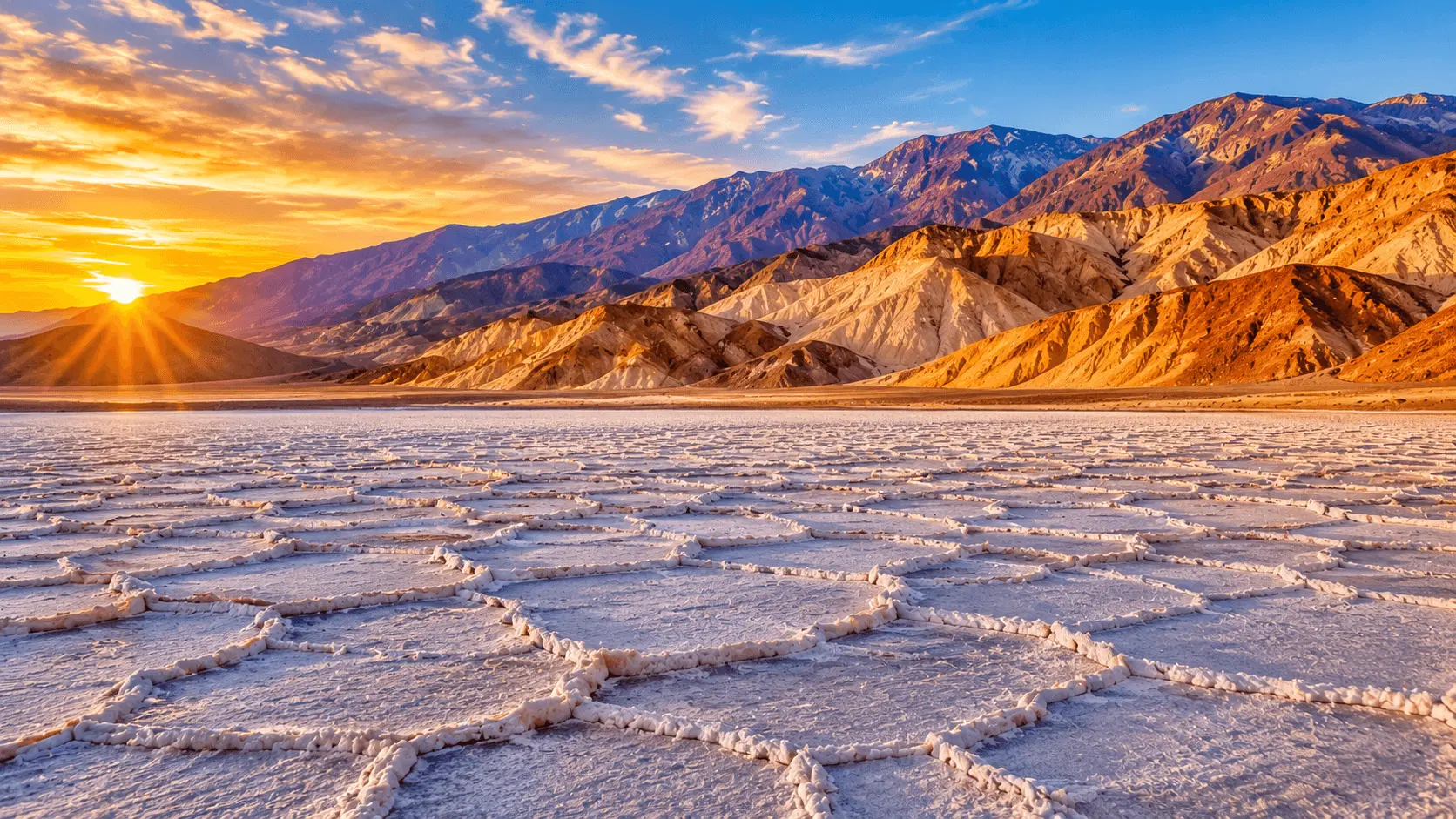
Death Valley National Park is one of the most remarkable places to explore in the American Southwest. Located in eastern California near the Nevada border, this vast desert landscape offers incredible natural beauty. From bright white salt flats and golden sand dunes to colorful mountains and deep volcanic craters, every corner reveals something different.
The park is especially popular with photographers, road-trippers, and outdoor lovers looking for unusual landscapes. You can watch the sunrise over dramatic badlands, explore winding canyons, or enjoy panoramic views from mountain overlooks. Some attractions are just a short walk from the parking area, while others require more time and preparation.
This guide covers the most stunning sights in Death Valley, including popular attractions, photography locations, and practical tips to help you plan an unforgettable visit.
Quick Answer:
Death Valley National Park is home to some of California’s most beautiful desert landscapes. The most stunning sights include Badwater Basin, Zabriskie Point, Artist’s Palette, Mesquite Flat Sand Dunes, Dante’s View, and Devil’s Golf Course. Visitors can also explore Golden Canyon, Ubehebe Crater, Salt Creek, and Father Crowley Overlook. Visit during cooler months for comfortable sightseeing, beautiful lighting, and excellent photography opportunities.
Why Visit Death Valley National Park?
Death Valley is famous for its extreme environment and incredible variety of natural scenery. Despite its name, the park supports different forms of life and contains mountains, valleys, dunes, springs, and unique geological formations.
One of its biggest attractions is the contrast between landscapes. You can stand on a bright white salt flat, drive through colorful mountain formations, and explore enormous sand dunes during the same trip.
The park is also a wonderful destination for photography. Changing sunlight creates different colors and shadows throughout the day. Sunrise and sunset are especially beautiful at several popular viewpoints.
Another reason to visit is the feeling of space and isolation. Death Valley offers wide-open scenery, quiet desert roads, and incredible night skies. It is a destination where you can enjoy nature at a slower pace.
Most Stunning Sights in Death Valley
Badwater Basin
Badwater Basin is one of the most famous attractions in Death Valley. It sits approximately 282 feet below sea level, making it the lowest point in North America.
The landscape features enormous white salt flats created by the evaporation of ancient lakes. As water disappears, salt crystals form beautiful geometric patterns across the ground.
Visitors can walk from the parking area onto the salt flats to explore the unusual formations. The scenery looks especially beautiful when the mountains reflect the sunlight.
Early morning and late afternoon are excellent times for photography. During summer, avoid long walks because the exposed salt flats become extremely hot.
Zabriskie Point
Zabriskie Point offers one of the most recognizable views in Death Valley. It overlooks colorful badlands formed by years of erosion, creating beautiful layers of golden, brown, and reddish hills.
The famous Manly Beacon stands above the surrounding formations and creates an impressive focal point for photographs.
A short uphill paved path leads from the parking area to the main viewpoint. Although the walk is relatively easy, the incline can feel challenging in hot weather.
Sunrise is particularly beautiful because soft light brings out the colors and shadows across the badlands. This is one of the best places to photograph Death Valley’s dramatic desert scenery.
Artist’s Palette
Artist’s Palette is famous for its colorful mountains and unusual mineral formations. Located along Artist Drive, this beautiful area features shades of green, pink, purple, yellow, and orange.
These colors come from different minerals in the volcanic rocks. Oxidation and natural geological processes have created the unusual patterns across the hillsides.
The attraction is reached through Artist Drive, a scenic one-way road that passes through beautiful desert landscapes. A short walk from the parking area gives you a closer look at the colorful formations.
Late afternoon is a wonderful time to visit because the lower sunlight highlights the different mineral shades. Bring your camera and allow extra time to enjoy the drive.
Mesquite Flat Sand Dunes
The Mesquite Flat Sand Dunes are among the most beautiful desert landscapes in Death Valley. Located near Stovepipe Wells, these dunes feature rolling golden sand surrounded by rugged mountains.
Wind constantly changes their shapes, creating fresh patterns and curves across the surface. Walking into the dunes gives you opportunities to discover beautiful photography compositions.
Sunrise and sunset are the best times to enjoy this location. Low-angle sunlight creates long shadows and highlights the textures of the sand.
There is no single marked route through the dunes, so remember your starting point and avoid wandering too far. Bring enough water, especially if you plan to explore beyond the first few dunes.
Dante’s View
Dante’s View provides one of the most impressive panoramic views in Death Valley. From this mountain overlook, visitors can see Badwater Basin, the valley floor, and the distant Panamint Mountains.
The viewpoint sits high above the desert, offering a completely different perspective from the lower attractions.
A paved road leads toward the overlook, followed by a relatively short walk to the viewing area. Temperatures are often cooler here than on the valley floor.
Sunrise and sunset can produce beautiful colors across the surrounding mountains. If you want a wide landscape photograph showing the scale of Death Valley, Dante’s View deserves a place on your itinerary.
Devil’s Golf Course
Devil’s Golf Course is one of the strangest natural sights in Death Valley. This enormous salt formation features rough, jagged surfaces created by the evaporation of ancient lake water.
The ground is covered with sharp salt crystals that form unusual shapes and textures. From a distance, the area looks like a rough, rocky desert landscape.
Visitors can explore the formations on foot when access conditions allow. However, wear sturdy shoes and watch where you step because the salt surfaces are uneven and sharp.
Photographers often focus on the small details rather than wide views. The patterns, textures, and shadows make this location especially interesting for close-up landscape photography.
Golden Canyon
Golden Canyon is a beautiful hiking destination surrounded by golden-colored rock walls and unusual desert formations.
The canyon begins near Badwater Road and offers opportunities to explore the landscape on foot. Its narrow passages and colorful rock surfaces create a completely different experience from the park’s wide-open viewpoints.
The trail connects with other hiking routes, including options toward Red Cathedral and nearby badlands. You can choose a shorter walk or plan a longer hike depending on your fitness and weather conditions.
Morning light is especially attractive because it brings out the warm colors of the canyon walls. Check trail conditions before setting out, particularly after rainfall.
Ubehebe Crater
Ubehebe Crater is a dramatic volcanic feature in the northern part of Death Valley. It was formed by a powerful steam explosion when hot underground material came into contact with groundwater.
The crater is approximately half a mile wide and around 600 feet deep. Its steep walls reveal layers of dark volcanic material and colorful sediment.
Visitors can enjoy the view from the parking area or walk along the crater rim. Hiking down into the crater is possible, but remember that climbing back up the loose, steep slope requires considerable effort.
The surrounding landscape also features smaller volcanic craters, making this area fascinating for geology lovers and photographers.
Salt Creek
Salt Creek offers a surprising natural landscape in the middle of Death Valley’s dry environment. Unlike the surrounding desert, this area contains a seasonal stream and provides habitat for the Salt Creek pupfish, a small native fish.
A wooden boardwalk allows visitors to explore the area without disturbing its sensitive environment. The short nature walk offers opportunities to observe the water, desert plants, and local wildlife.
Spring is often a particularly interesting time to visit because water conditions and seasonal changes can make the area more active.
Remember to stay on the boardwalk and avoid disturbing the wildlife. This is a quieter attraction for travelers interested in nature and the ecological side of Death Valley.
Father Crowley Overlook
Father Crowley Overlook is located in the western part of Death Valley National Park. It provides impressive views of Rainbow Canyon and the rugged Panamint Mountains.
The viewpoint is especially attractive because of the colorful rock formations and dramatic mountain scenery. It also offers a different perspective from the popular attractions around Furnace Creek.
Visitors can enjoy the landscape from the main overlook without taking a long hike. Photographers will appreciate the layered mountains and changing desert light.
Allow extra driving time if you are visiting from the central valley area. Check road conditions before departure, especially after storms, because access routes can change.
Step 6: Best Photography Spots in Death Valley
Death Valley is an excellent destination for landscape photography. Its variety of geological formations, open spaces, and changing light create opportunities for both beginners and experienced photographers.
Here are some of the best locations to prioritize:
| Photography location | Best visual feature |
|---|---|
| Zabriskie Point | Golden badlands |
| Badwater Basin | Geometric salt patterns |
| Artist’s Palette | Colorful mineral formations |
| Mesquite Flat Dunes | Sand textures and shadows |
| Dante’s View | Panoramic desert views |
| Devil’s Golf Course | Unique salt textures |
| Father Crowley Overlook | Mountain scenery |
Photography tips
-
Visit viewpoints during golden hour for softer light.
-
Use a wide-angle lens for expansive desert landscapes.
-
Try close-up photographs of salt crystals and sand patterns.
-
Carry a tripod for low-light photography.
-
Protect camera equipment from blowing sand.
-
Mark your parking location before exploring large open areas.
Small details can be just as interesting as the park’s famous panoramic views.
Step 7: Best Time to Visit Death Valley
The best time to visit Death Valley is generally October through April, when temperatures are more comfortable for exploring the park.
| Season | What to expect |
|---|---|
| Spring | Pleasant sightseeing weather and possible wildflowers |
| Summer | Extreme heat, limited safe hiking opportunities |
| Autumn | Warm days and beautiful desert light |
| Winter | Cooler temperatures, clear skies, and occasional mountain snow |
Spring is especially popular because the desert may produce colorful wildflowers when rainfall and seasonal conditions are favorable.
Autumn is another excellent choice for photography and road trips. Winter offers beautiful mountain scenery and comfortable daytime conditions.
Summer requires extra caution. The National Park Service warns that valley temperatures can reach 130°F (54°C). Avoid strenuous lower-elevation hiking during extreme heat.
Step 8: Tips for Exploring Death Valley Safely
Death Valley is beautiful, but its remote desert environment requires preparation. Long distances, limited phone coverage, extreme temperatures, and sudden weather changes can create serious problems.
Keep these tips in mind:
-
Carry plenty of water: Bring enough drinking water for everyone in your vehicle.
-
Check road conditions: Rain and flash floods can damage roads and trails.
-
Avoid summer hiking: Do not hike in the valley during extreme heat.
-
Keep your vehicle fueled: Gas stations are limited and distances are long.
-
Download offline maps: Cell service is limited across much of the park.
-
Stay on designated roads: Never drive across desert soil or salt flats.
-
Watch the weather: Avoid canyons and washes during storms.
The NPS recommends carrying at least one gallon of water per person per day, with additional water for activity and heat.
Current road warning: The November 1, 2026 NPS update reports rainfall-related closures. Avoid unpaved roads until officials confirm they are safe to use. Check the official Death Valley road and weather conditions before every trip.
Step 9: How to Plan Your Death Valley Sightseeing Trip
Death Valley is enormous, so planning your route will help you make the most of your visit. Many popular attractions are spread across different parts of the park.
For a first visit, consider spending at least two days exploring the major sights. You can group nearby attractions together and avoid unnecessary driving.
Suggested two-day sightseeing plan:
| Day | Attractions |
|---|---|
| Day 1 | Zabriskie Point, Dante’s View, Golden Canyon, Badwater Basin, Devil’s Golf Course, Artist’s Palette |
| Day 2 | Mesquite Flat Sand Dunes, Salt Creek, Ubehebe Crater, Father Crowley Overlook |
This is a suggested route, not a guarantee that every road will be open. Current flood-related closures may require changes.
Entrance fees and visitor information
The current standard entrance fee for a private vehicle is $30, covering seven days of entry. The park also accepts qualifying America the Beautiful passes. No advance reservation is required for general park entry.
You can check official visitor information, maps, fees, and road conditions here:
Frequently Asked Questions
What is the most beautiful place in Death Valley?
Zabriskie Point, Badwater Basin, Artist’s Palette, and Dante’s View are among the most beautiful places. Each offers different scenery, from colorful badlands to enormous salt flats.
What is the most famous sight in Death Valley?
Badwater Basin is one of the park’s most famous attractions because it sits 282 feet below sea level and features striking white salt formations.
How many days do you need in Death Valley?
Two days are ideal for exploring many major attractions without rushing. A longer visit gives you more time for hiking, photography, and remote landscapes.
What is the best time to photograph Death Valley?
Early morning and late afternoon are excellent for landscape photography. Sunrise and sunset create beautiful shadows, warm colors, and dramatic desert scenery.
Can you visit Death Valley in one day?
Yes. You can visit several major attractions in one day, including Zabriskie Point, Badwater Basin, Artist’s Palette, and Mesquite Flat Sand Dunes, depending on road conditions.
Is Death Valley safe to visit?
Yes, with proper preparation. Carry enough water, check weather and road conditions, avoid extreme heat, and stay on designated roads and trails.
Does Death Valley have sand dunes?
Yes. Mesquite Flat Sand Dunes are among the park’s most popular dune areas, featuring beautiful rolling sand formations and mountain views.
Is there an entrance fee for Death Valley?
Yes. A standard private vehicle entrance pass currently costs $30 and is valid for seven days. Other pass options are available.