
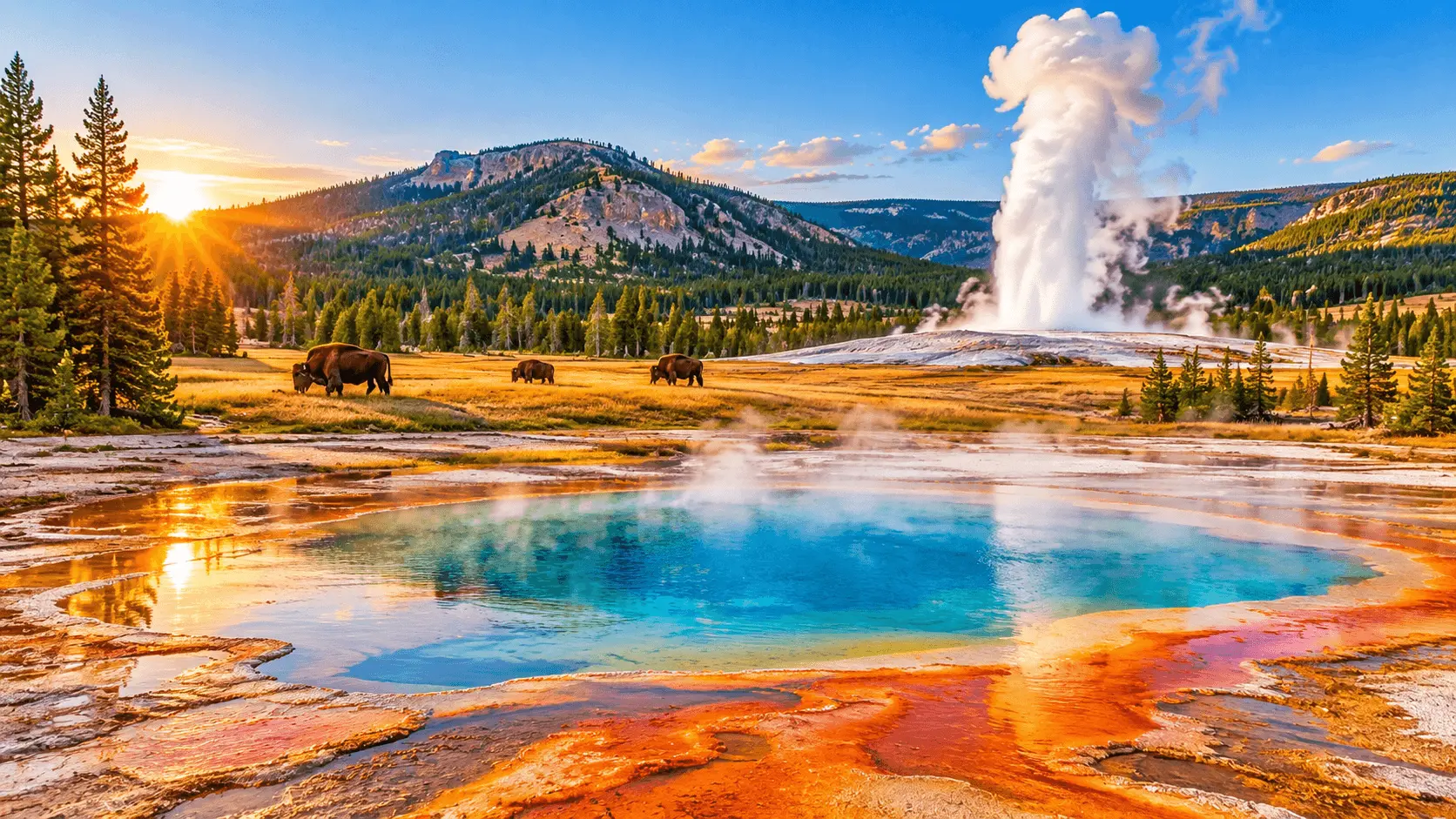
Yellowstone National Park is one of the most incredible places to explore in the United States. Famous for its colorful hot springs, powerful geysers, beautiful waterfalls, and amazing wildlife, this park offers something special for every traveler. Whether you enjoy hiking, photography, scenic drives, or watching wild animals, you will find plenty of things to do in Yellowstone.
From watching Old Faithful erupt to spotting bison in Lamar Valley, every experience brings a different view of nature. You can also explore peaceful lakes, walk through geothermal areas, and discover beautiful trails away from busy viewpoints.
Yellowstone is enormous, so planning your visit is important. This guide covers 15 unforgettable experiences, including famous attractions, hidden gems, and practical tips to help you enjoy your adventure.
Quick Answer
The best things to do in Yellowstone include watching Old Faithful erupt, exploring Grand Prismatic Spring, visiting Mammoth Hot Springs, spotting wildlife in Lamar and Hayden valleys, and seeing the Grand Canyon of the Yellowstone. You can also explore Yellowstone Lake, visit beautiful waterfalls, hike scenic trails, discover West Thumb Geyser Basin, and join ranger programs. Allow several days to enjoy the park without rushing between attractions.
Best Things to Do in Yellowstone
Yellowstone is famous for its geothermal wonders and unique natural landscapes. These attractions are excellent starting points for first-time visitors.
Watch Old Faithful Geyser Erupt
Old Faithful Geyser is one of the most famous attractions in the park. This natural geyser shoots hot water high into the air at regular but not perfectly fixed intervals. Watching an eruption is an exciting experience, especially if this is your first visit.
You can wait in the main viewing area or explore the nearby Upper Geyser Basin while checking eruption predictions. The surrounding area also has historic buildings, walking paths, and other geothermal features. Arrive early during busy months to find parking and enjoy a more peaceful experience.
Explore Grand Prismatic Spring
Grand Prismatic Spring is one of the most beautiful natural attractions in Yellowstone. Its bright blue center and colorful rings of orange, yellow, and green make it a favorite destination for photographers.
You can admire the spring from the Midway Geyser Basin boardwalk, which provides close views of this impressive geothermal feature. For a wider perspective, take the Grand Prismatic Overlook Trail when it is open. The elevated viewpoint helps you appreciate the spring’s size and colorful surroundings. Visit earlier in the day if you want to avoid some of the crowds.
Walk Around Mammoth Hot Springs
Mammoth Hot Springs offers a landscape that looks very different from the park’s other geothermal attractions. Instead of colorful pools, you will discover large travertine terraces formed by mineral-rich hot water.
The Upper and Lower Terrace boardwalks allow visitors to explore these unusual formations safely. Minerva Terrace and Canary Spring are among the interesting features to look for. The landscape changes over time as water flow and mineral deposits shift. Wear comfortable walking shoes and allow enough time to explore the different viewpoints.
Discover Norris Geyser Basin
Norris Geyser Basin is one of the most active geothermal areas in Yellowstone. It contains steaming vents, colorful hot springs, bubbling pools, and impressive geysers.
The basin has two main areas: Porcelain Basin and Back Basin. Porcelain Basin offers wide-open views of the steaming landscape, while Back Basin features forested trails and geothermal attractions. You may also learn about Steamboat Geyser, the world’s tallest active geyser. Its major eruptions are unpredictable, so do not plan your entire visit around seeing one.
Visit West Thumb Geyser Basin
West Thumb Geyser Basin is a beautiful geothermal area located beside Yellowstone Lake. Its combination of colorful hot springs, steaming pools, and lake views makes it one of the most scenic places in the park.
A boardwalk loop takes you past several geothermal features, including Abyss Pool and Fishing Cone. The area is relatively easy to explore, making it a good choice for families and travelers who prefer shorter walks. You can also enjoy peaceful views across the lake while learning about the geothermal activity beneath the landscape.
Best Places to See Wildlife in Yellowstone
Yellowstone is one of the best places in the United States to observe wildlife in a natural environment. With patience and a little luck, visitors may spot bison, elk, wolves, bears, and many bird species.
Watch Wildlife in Lamar Valley
Lamar Valley is often called America’s Serengeti because of its open landscapes and wildlife viewing opportunities. It is one of the best places in Yellowstone to look for bison, elk, wolves, and occasionally bears.
Early morning and evening are good times to watch wildlife because many animals are more active during cooler hours. Bring binoculars or a camera with a zoom lens so you can observe animals without getting too close. Be patient, use designated pullouts, and never block traffic when stopping to watch wildlife.
Explore Hayden Valley
Hayden Valley is another excellent destination for wildlife watching. Its wide grasslands, rivers, and wetlands provide a natural home for bison, elk, bears, and other animals.
The open landscape makes it easier to scan the area with binoculars, especially during early morning and late evening. You can also enjoy beautiful mountain views and peaceful scenery while driving through the valley. Bring patience because wildlife sightings are never guaranteed. Even if you do not spot a bear or wolf, the landscape itself makes this area worth visiting.
Explore Yellowstone’s Beautiful Waterfalls and Canyons
Beyond its geysers and wildlife, Yellowstone has impressive waterfalls and colorful canyon landscapes. These destinations offer some of the park’s best photography opportunities.
See the Grand Canyon of the Yellowstone
The Grand Canyon of the Yellowstone is one of the park’s most impressive natural landmarks. Its colorful canyon walls, deep valleys, and powerful waterfalls create spectacular scenery.
Visit Artist Point for one of the most famous views of the Lower Falls. You can also explore overlooks along the North and South Rims for different perspectives of the canyon. If you enjoy hiking, several trails lead closer to the river and waterfall viewpoints. Some paths include steep stairs, so check trail conditions before choosing your route.
Visit Tower Fall
Tower Fall is a beautiful waterfall surrounded by unusual rock formations and forest scenery. Water drops from a height of around 132 feet, creating an impressive sight from the main overlook.
The viewpoint is a convenient stop for visitors exploring the northern part of Yellowstone. You can take photographs, enjoy the scenery, and learn about the surrounding landscape. Trail access beyond the main viewing area can change, so check current conditions before planning a longer walk. It is also a useful stop when traveling toward Lamar Valley.
Discover Fairy Falls
Fairy Falls is a beautiful waterfall that rewards visitors willing to take a longer walk. The trail leads through a forested landscape to a waterfall that drops approximately 200 feet.
Many hikers combine this trip with the Grand Prismatic Spring Overlook, making it a rewarding outdoor adventure. The route offers a quieter experience compared with the busiest geothermal boardwalks. Wear proper hiking shoes, carry water, and check seasonal trail closures before setting out. The trail may not be suitable for every visitor, especially when snow or muddy conditions are present.
Enjoy Yellowstone’s Scenic Landscapes and Outdoor Activities
Yellowstone also offers beautiful lakes, scenic roads, and outdoor activities that allow visitors to experience more of its natural surroundings.
Explore Yellowstone Lake
Yellowstone Lake is one of the largest high-elevation lakes in North America. Surrounded by mountains and forests, it offers a peaceful change of scenery from the park’s busy geothermal areas.
Visitors can enjoy lakeside viewpoints, photography, boating, and permitted fishing activities. West Thumb is a particularly scenic place to combine lake views with geothermal sightseeing. Remember that the water remains extremely cold, even during summer. Stay away from unstable shorelines and follow boating and fishing regulations if you plan to enjoy activities on the lake.
Take a Scenic Drive Through the Park
Driving is one of the easiest ways to discover Yellowstone’s different landscapes. The Grand Loop Road connects many famous attractions, including Old Faithful, Mammoth Hot Springs, Canyon Village, and Yellowstone Lake.
You can stop at scenic viewpoints, explore short trails, and watch wildlife along the way. However, driving distances can be longer than expected because the park is enormous and traffic can slow down near animals. Divide your sightseeing into regional sections rather than trying to visit everything in one day. Always check road conditions before traveling.
Hike Yellowstone’s Beautiful Trails
Hiking is one of the best ways to experience Yellowstone beyond its main roadside attractions. The park has more than 1,100 miles of hiking trails, offering options for different fitness levels and interests.
Popular routes include the Fairy Falls Trail, Mount Washburn Trail, and short walks around geothermal areas. You can enjoy forest scenery, mountain views, waterfalls, and open meadows along the way. Before hiking, check trail conditions, carry enough water, and bring bear spray where appropriate. Some high-elevation trails remain inaccessible for parts of the year because of snow.
Join a Ranger Program
A ranger program is a wonderful way to understand Yellowstone’s natural history and wildlife. Park rangers lead educational activities, talks, and guided experiences that explain the area’s geothermal features, animals, geology, and conservation work.
These programs can make your visit more interesting, especially if you are traveling with children or visiting for the first time. Check the National Park Service schedule for available activities, meeting locations, and seasonal programs. Some programs are free, but availability and schedules can change throughout the year.
Hidden Gems and Lesser-Known Places in Yellowstone
If you have extra time, explore quieter places such as Virginia Cascades, Moose Falls, and Obsidian Cliff. These attractions offer a different side of Yellowstone beyond its busiest geyser basins and famous wildlife valleys.
Virginia Cascades is a lovely waterfall along a scenic one-way drive. Moose Falls is a picturesque waterfall near the South Entrance, while Obsidian Cliff is an important geological and cultural landmark. You can also explore quieter areas around Yellowstone Lake and West Thumb. Check current access information because seasonal closures and road conditions can affect which places you can reach.
Best Time to Visit Yellowstone
The best time to visit Yellowstone depends on the activities you want to enjoy. Late spring through early fall is generally the main season for exploring most park roads and attractions by car.
- Spring (April–May): A beautiful time for wildlife watching, although some roads and trails may still be closed.
- Summer (June–August): Popular for hiking, sightseeing, camping, and family trips. Expect crowds and busy parking areas.
- Fall (September–October): Cooler temperatures, autumn colors, and excellent wildlife viewing make this a favorite season.
- Winter (November–March): Snow-covered scenery and guided snowcoach or snowmobile experiences offer a different adventure, but regular vehicle access is heavily restricted.
Weather and road conditions can change quickly. Check the official park website before planning your visit.
Tips for Planning Your Yellowstone Trip
Yellowstone covers nearly 3,500 square miles, so planning your route can make a big difference. Keep these practical tips in mind:
- Allow enough time: Aim for at least three to four days if you want to explore several regions without rushing.
- Plan by location: Group nearby attractions together to reduce unnecessary driving.
- Start early: Morning visits can help you avoid crowds and improve your chances of seeing wildlife.
- Carry binoculars: They make distant wildlife easier to observe safely.
- Stay on boardwalks: Geothermal ground can be thin and unstable, with dangerously hot water underneath.
- Respect wildlife: Stay at least 100 yards from bears, wolves, and cougars, and 25 yards from other animals, including bison and elk.
- Check road closures: Seasonal road closures can change which entrances and attractions are accessible.
- Prepare for changing weather: Bring layers, comfortable shoes, and rain protection.
- Download offline maps: Mobile service is limited in many parts of the park.
Yellowstone is a wild environment, so follow park regulations and never take unnecessary risks for photographs or wildlife encounters.
Frequently Asked Questions
What is the number one thing to do in Yellowstone?
Watching Old Faithful erupt is one of the most iconic Yellowstone experiences. However, exploring Grand Prismatic Spring and spotting wildlife in Lamar Valley are also unforgettable activities.
How many days do you need in Yellowstone?
Three to four days is a good starting point for exploring the major attractions. Five or more days provide extra time for hiking, wildlife watching, waterfalls, and less-visited areas.
What is the best month to visit Yellowstone?
June and September are popular choices for sightseeing and outdoor activities. June offers longer days, while September brings cooler temperatures and beautiful fall scenery. Always check seasonal road access.
Can you see wildlife in Yellowstone?
Yes. Yellowstone is home to bison, elk, wolves, grizzly bears, black bears, and many other animals. Lamar Valley and Hayden Valley are popular wildlife-viewing areas, although sightings are never guaranteed.
Is Yellowstone worth visiting with kids?
Absolutely. Children can enjoy watching geysers, exploring boardwalks, spotting wildlife from a safe distance, and attending ranger programs. Keep children close in geothermal areas and follow park safety rules.
Do you need a reservation to enter Yellowstone?
A vehicle reservation is not required for general entry, but visitors must have a valid entrance pass. Lodging, campgrounds, and certain activities may require advance reservations.