
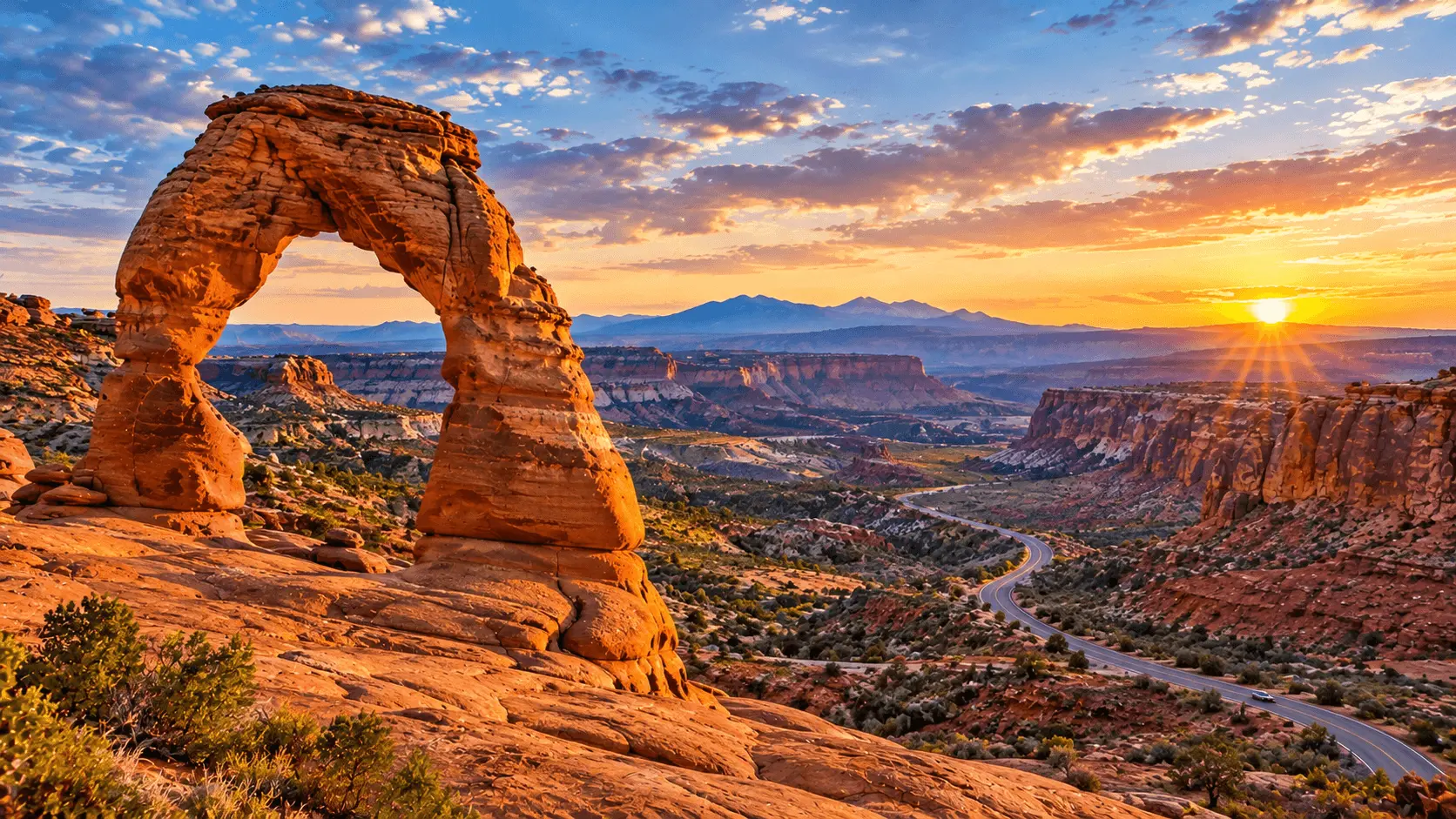
Utah is home to five incredible national parks, each with its own landscape, hiking trails, and unforgettable views. Together, Utah’s Mighty 5 make one of the best road trips in the American Southwest. You can walk beneath towering canyon walls in Zion, watch the sunrise over Bryce Canyon’s hoodoos, explore Capitol Reef’s colorful rock formations, discover natural arches in Arches National Park, and look across vast desert canyons in Canyonlands.
However, visiting all five parks takes more planning than simply connecting them on a map. Driving distances, weather, trail difficulty, entrance rules, and overnight stops can all affect your trip. This Utah Mighty 5 travel guide explains what to see in each park, when to go, how to plan your route, and how much time to allow. Whether you have one week or closer to ten days, you can use these tips to build a memorable and more relaxed Utah national parks road trip.
Quick Answer:
Utah’s Mighty 5 are Zion, Bryce Canyon, Capitol Reef, Arches, and Canyonlands National Parks. A road trip linking all five is best enjoyed over seven to ten days, giving you time for scenic drives, short walks, and selected hikes. Spring and fall often offer comfortable hiking weather, though conditions vary by elevation. Plan your route in advance, check park alerts, carry enough water, and reserve popular lodging and permitted activities early.
What Are Utah’s Mighty 5?
The Mighty 5 are five national parks in southern and southeastern Utah. Although they share dramatic sandstone landscapes, each park offers a different experience.
-
Zion National Park: Known for tall canyon walls, the Virgin River, and popular hiking routes.
-
Bryce Canyon National Park: Famous for its natural amphitheaters filled with orange and red rock spires called hoodoos.
-
Capitol Reef National Park: Offers the Waterpocket Fold, historic Fruita, petroglyphs, and scenic drives.
-
Arches National Park: Features thousands of natural stone arches, balanced rocks, and short-to-long hiking options.
-
Canyonlands National Park: Protects a vast landscape of canyons, mesas, cliffs, and river-carved terrain.
The parks are spread across a large region, so you should not expect to drive between them in a few minutes. The journey is part of the experience, with changing landscapes and small towns along the way.
How Many Days Do You Need?
The right trip length depends on how much hiking you want to do and whether you prefer a relaxed pace or a quick overview.
| Trip length | What to expect |
|---|---|
| 5 days | A fast visit with limited time in each park |
| 7 days | A practical overview with time for selected hikes and viewpoints |
| 10 days | More room for longer hikes, scenic detours, and rest |
| 12–14 days | A slower trip with extra trails, nearby state parks, or outdoor activities |
A seven-day itinerary is a useful starting point for travelers who want to see all five parks without spending every day driving. Still, it will require choices: you may only have time for one major hike or a few short stops in some parks.
If hiking is your main goal, plan more time for Zion and consider extra nights near Moab for Arches and Canyonlands. Visit Utah’s official 10-day itinerary is another helpful reference if you want to add scenic routes and stops beyond the five parks.
Best Time to Visit Utah’s Mighty 5
Spring and fall are popular for a reason: temperatures are often more comfortable for walking and hiking than during the hottest summer months. However, conditions vary because the parks sit at different elevations.
-
Spring (March–May): Pleasant days are possible, but higher trails may still be cold or snowy. Desert areas can become warm quickly.
-
Summer (June–August): Longer daylight hours make planning easier, but lower-elevation trails can be extremely hot. Start early and avoid strenuous hikes during peak heat.
-
Fall (September–October): Often a good balance of comfortable hiking temperatures and changing seasonal colors, though popular areas can remain busy.
-
Winter (November–February): Fewer visitors at some locations, but snow, ice, and road closures can affect access, especially at higher elevations.
Before traveling, check each park’s weather forecast, road status, and trail alerts. Bryce Canyon is at a higher elevation than many desert destinations, so it can feel much colder than the weather in nearby lowland areas. Its roads may also close temporarily after winter storms.
Best Route for a Utah Mighty 5 Road Trip
A common route starts in Las Vegas and travels northeast through Zion, Bryce Canyon, Capitol Reef, and the Moab area for Arches and Canyonlands. You can also reverse the route or begin in Salt Lake City, depending on flight prices and your preferred direction.
A simple route plan is:
-
Zion: Stay in or near Springdale.
-
Bryce Canyon: Continue northeast and stay near the park or Bryce Canyon City.
-
Capitol Reef: Drive toward Torrey and explore the Fruita area.
-
Canyonlands: Use Moab as a base for the Island in the Sky district.
-
Arches: Explore the park from Moab before departing.
This route is a planning framework rather than a fixed schedule. Check actual driving times before finalizing each day, and allow extra time for fuel, meals, trailheads, and photo stops. Some scenic roads and backcountry routes need more preparation than a standard highway drive.
Important: Canyonlands has separate districts that are not connected by roads inside the park. Island in the Sky is the most practical choice for a shorter visit from Moab, while The Needles and The Maze require more time and planning.
Zion National Park: Canyons and Classic Hikes
Zion National Park is known for towering sandstone cliffs, narrow canyon scenery, and trails that range from easy riverside walks to demanding climbs. It is a great place to spend time hiking, but you can also enjoy impressive views without attempting a difficult route.
Best things to do in Zion
-
The Narrows: Walk through the Virgin River between high canyon walls when conditions allow. Check water levels, flash-flood warnings, and current closures before going.
-
Riverside Walk: A popular option for experiencing the canyon without committing to a long hike.
-
Emerald Pools: Choose a route that matches your available time and trail conditions.
-
Angels Landing: A strenuous, exposed hike with steep drop-offs. A permit is required for anyone hiking beyond the permitted route’s checkpoint toward Angels Landing.
The park’s Zion Canyon shuttle serves popular stops and trailheads. You do not need a reservation to ride the shuttle, but schedules and operations can change. Check the official shuttle page before your visit.
Tip: Stay near Springdale if you want convenient access to the park entrance and shuttle area. Start early, bring water, and do not underestimate the heat or the effort required on exposed trails.
Bryce Canyon National Park: A Land of Hoodoos
Bryce Canyon National Park looks different from the other parks because its landscape is filled with tall, narrow rock formations called hoodoos. The best-known views are in the Bryce Amphitheater area, where layers of orange, pink, and cream-colored stone create a striking scene.
Best things to do in Bryce Canyon
-
Sunrise Point and Sunset Point: Easy-to-reach viewpoints for seeing the amphitheater from the rim.
-
Inspiration Point: A wide view across the hoodoo formations.
-
Queen’s Garden and Navajo Loop: A popular combination for descending among the rock formations, when the trails are open and conditions are safe.
-
Scenic drive: Explore additional viewpoints if you have more time.
Try to arrive early for softer light and a quieter experience. The rim can be cold and windy even when lower areas feel warm, so pack an extra layer.
Bryce Canyon is generally open year-round, but snow and ice can affect roads and trails. Its seasonal shuttle can help visitors reach popular viewpoints during its operating period; confirm the current schedule before traveling.
Capitol Reef National Park: Scenic Drives and Quiet Trails
Capitol Reef National Park is sometimes overlooked by travelers rushing between Bryce Canyon and Moab, but it deserves time of its own. The park protects the Waterpocket Fold, a dramatic geological feature that stretches across the landscape, along with sandstone cliffs, domes, canyons, and historic sites.
Best things to do in Capitol Reef
-
Fruita Historic District: See the historic orchards and learn about the community that once lived here.
-
Capitol Reef Scenic Drive: Enjoy a paved route through striking rock scenery, with side roads and trail access where open.
-
Hickman Bridge Trail: A popular hike to a natural rock bridge.
-
Petroglyph panels: View historic rock art from designated viewing areas.
Allow time to stop along Highway 24, which passes through the park area, and check road conditions before driving any unpaved route. The Scenic Drive is an out-and-back road rather than a loop, and weather can affect access to side roads.
Torrey is a convenient base for exploring Capitol Reef. If you want a less hurried trip, consider spending a night here rather than driving straight through.
Arches National Park: Famous Rock Formations
Arches National Park protects a remarkable collection of natural sandstone arches, fins, pinnacles, and balanced rocks. Many visitors explore it from Moab, making it easy to combine the park with nearby outdoor activities.
Best things to do in Arches
-
Delicate Arch: The iconic arch reached by a moderately strenuous exposed trail. Check current trail conditions and allow enough time.
-
Windows Section: A useful area for seeing several impressive formations on relatively short walks.
-
Balanced Rock: A recognizable landmark with a short path around its base.
-
Devils Garden: Offers longer walks and access to multiple arches for visitors with more time.
Driving the scenic road and choosing a few stops can fill a half day, while hikers may want a full day or more. Carry water and sun protection because shade is limited in many exposed areas.
2026 access note: Arches does not require advance timed-entry reservations in 2026. However, the National Park Service warns that congestion can still cause entrance delays or temporary diversions. Reservations are still required for certain activities, including Fiery Furnace hikes and Devils Garden Campground.
Canyonlands National Park: Huge Views and Deep Canyons
Canyonlands National Park offers wide-open views across a vast network of canyons, mesas, and cliffs carved by the Green and Colorado rivers. Its landscape feels more open and remote than the busy trail corridors in some other parks.
Best things to do in Canyonlands
-
Island in the Sky: The most accessible district for many first-time visitors.
-
Mesa Arch: A short hike to a famous natural arch overlooking canyon country.
-
Grand View Point: A dramatic overlook with sweeping views.
-
Green River Overlook: A scenic stop for seeing the scale of the landscape.
Moab is a practical base for the Island in the Sky district, around a 40-minute drive from its visitor center.
Do not assume you can easily visit every district in one day. The Needles offers a different hiking experience, while The Maze is remote and requires much more time, preparation, and self-reliance. The park advises visitors to check road conditions and not rely on GPS alone for directions.
A Practical 7-Day Utah Mighty 5 Itinerary
This sample itinerary covers all five parks, with time for selected highlights. It is a fast-paced overview, not a plan for completing every major hike.
| Day | Plan | Overnight base |
|---|---|---|
| 1 | Arrive in the Las Vegas area and drive to Zion; take a short walk if time allows | Springdale |
| 2 | Explore Zion’s canyon, shuttle stops, and one hike suited to your ability | Springdale |
| 3 | Drive to Bryce Canyon; visit key viewpoints and choose a short hike | Near Bryce Canyon |
| 4 | Drive toward Capitol Reef, stopping at scenic areas along the way | Torrey |
| 5 | Explore Capitol Reef’s Fruita area, Scenic Drive, and a trail; continue toward Moab if timing allows | Moab |
| 6 | Visit Arches National Park and prioritize the formations and hikes that interest you most | Moab |
| 7 | Explore Canyonlands’ Island in the Sky overlooks before departure | Moab or onward destination |
This schedule requires careful driving-time planning, particularly on Days 4, 5, and 7. If you can add two or three days, use them to slow down, take longer hikes, and avoid arriving at each park late in the day.
For a more comfortable trip, consider spending an additional night in the Moab area so that Arches and Canyonlands each receive a full day. If your main goal is hiking Zion, add another night near Springdale as well.
Where to Stay Along the Route
Choosing a few overnight bases is usually easier than changing accommodation every night. It also gives you more flexibility if the weather changes or you decide to spend longer on a trail.
-
Springdale: Best for convenient access to Zion Canyon and its shuttle system.
-
Bryce Canyon City or nearby areas: Useful for early visits to the Bryce Amphitheater and sunrise viewpoints.
-
Torrey: A practical base for Capitol Reef and its surrounding scenic drives.
-
Moab: The main base for Arches and the Island in the Sky district of Canyonlands.
Book early for popular travel periods, especially spring and fall. Compare lodging, campgrounds, and vacation rentals based on their actual driving distance to the park entrance, not only the town name. If you plan to camp inside a park, check the official reservation system and seasonal operating details before building your itinerary around a campsite.
Entrance Fees, Permits, and Reservations
Entry costs and activity rules can change, so check each park’s official fees page before you travel. If you plan to visit several national parks during one trip, compare individual entry fees with the America the Beautiful annual pass to see which option best fits your plans.
Keep these details in mind:
- Arches: No advance timed-entry reservation is required in 2026, but congestion may still affect entry. Some activities and campsites require reservations.
-
Zion: The park shuttle does not require a reservation, but Angels Landing requires a permit.
- Bryce Canyon: No advance reservation is required just to enter, though shuttle schedules and seasonal services vary.
- Capitol Reef: Check the current fees page for applicable entry and Scenic Drive charges, as well as pass acceptance.
-
Canyonlands: Check current entrance fees, road conditions, and any permits required for your chosen backcountry activity.
Do not assume that a park entrance pass covers every tour, campground, or permitted activity. Verify requirements for the exact hike or experience you intend to do.
What to Pack and Safety Tips
The desert can be more demanding than it looks. Even on a short trail, you may face strong sun, dry air, steep terrain, or sudden changes in weather.
-
Carry enough water: Bring more than you expect to need, especially on exposed trails. Check park guidance for your hike and the day’s conditions.
-
Wear suitable footwear: Use sturdy shoes with good grip, and take extra care on loose rock or uneven surfaces.
-
Check weather and trail alerts: Flash floods, thunderstorms, snow, ice, and extreme heat can change plans quickly.
-
Download offline maps: Mobile reception can be limited in remote areas. Carry directions and know your route before setting out.
-
Fuel up and bring snacks: Do not assume fuel, food, or water will be available inside or close to every park.
-
Respect the landscape: Stay on marked trails where required, avoid climbing fragile formations, pack out rubbish, and leave cultural sites undisturbed.
Never enter a slot canyon when flash-flood risk is present, and do not continue a hike simply because it is on your itinerary. A safer alternative is always better than pushing beyond your limits.
Frequently Asked Question’s
Can you visit all five Utah national parks in five days?
Yes, but it will be a rushed trip. You can visit major viewpoints and take a few short walks, but you will have limited time for longer hikes and unexpected delays. Seven to ten days is a better target for a more balanced experience.
What is the best order to visit Utah’s Mighty 5?
A common route from Las Vegas is Zion, Bryce Canyon, Capitol Reef, then the Moab area for Canyonlands and Arches. You can reverse it or start elsewhere, depending on flights and accommodation. Check driving times before finalizing your route.
Which Utah national park should I spend the most time in?
It depends on your interests. Zion is a strong choice for canyon hikes, while Arches and Canyonlands pair well for travelers staying in Moab. If you prefer scenic drives and quieter stops, allow more time for Capitol Reef.
Do I need a four-wheel-drive vehicle?
Not for the main paved roads and many popular stops in the five parks. A standard car is usually enough for a typical road trip. Certain remote dirt roads and backcountry routes may require high clearance or four-wheel drive, so check the specific route before driving it.
Is summer a good time for the Utah Mighty 5?
Summer offers long days, but temperatures can become dangerously high, particularly on exposed desert trails. Start early, carry adequate water, and adjust your plans to the forecast. Spring and fall are often more comfortable for hiking, although conditions vary.
Do I need reservations for all five parks?
No single reservation rule applies to every park or activity. In 2026, Arches does not require timed-entry reservations, and Zion’s shuttle does not require a reservation, but Angels Landing needs a permit. Always confirm current rules for your dates and planned activities.
Final Thoughts
A Utah Mighty 5 road trip is an unforgettable way to experience the American Southwest. Each park brings something different, from Zion’s towering cliffs and Bryce Canyon’s hoodoos to Capitol Reef’s scenic drives, Arches’ natural formations, and Canyonlands’ expansive views.
The key to a successful trip is to plan a route that matches your available time. Seven days gives you a useful overview, while ten days or more lets you hike, take scenic detours, and explore at a slower pace. Book accommodation early, check official park alerts, and leave room for changing weather and unexpected discoveries.
With realistic planning and respect for the desert environment, you can enjoy all five parks without turning every day into a race against the clock.